High standards, surprisingly manual backend.
A Chief Stew runs cabin turnover, guest preferences, provisioning, inventories, documents and crew tasks, mostly across Excel files, group chats and handwritten lists.
Details get buried, tasks get missed, new crew need everything re-explained, and the Chief Stew carries too much in her head.
Two doors in: set up the vessel, or go straight to work.
I shaped a practical MVP: an operational layer for yacht interior teams, not another checklist app. Two paths from the first screen: guided admin setup, or straight to the daily dashboard.
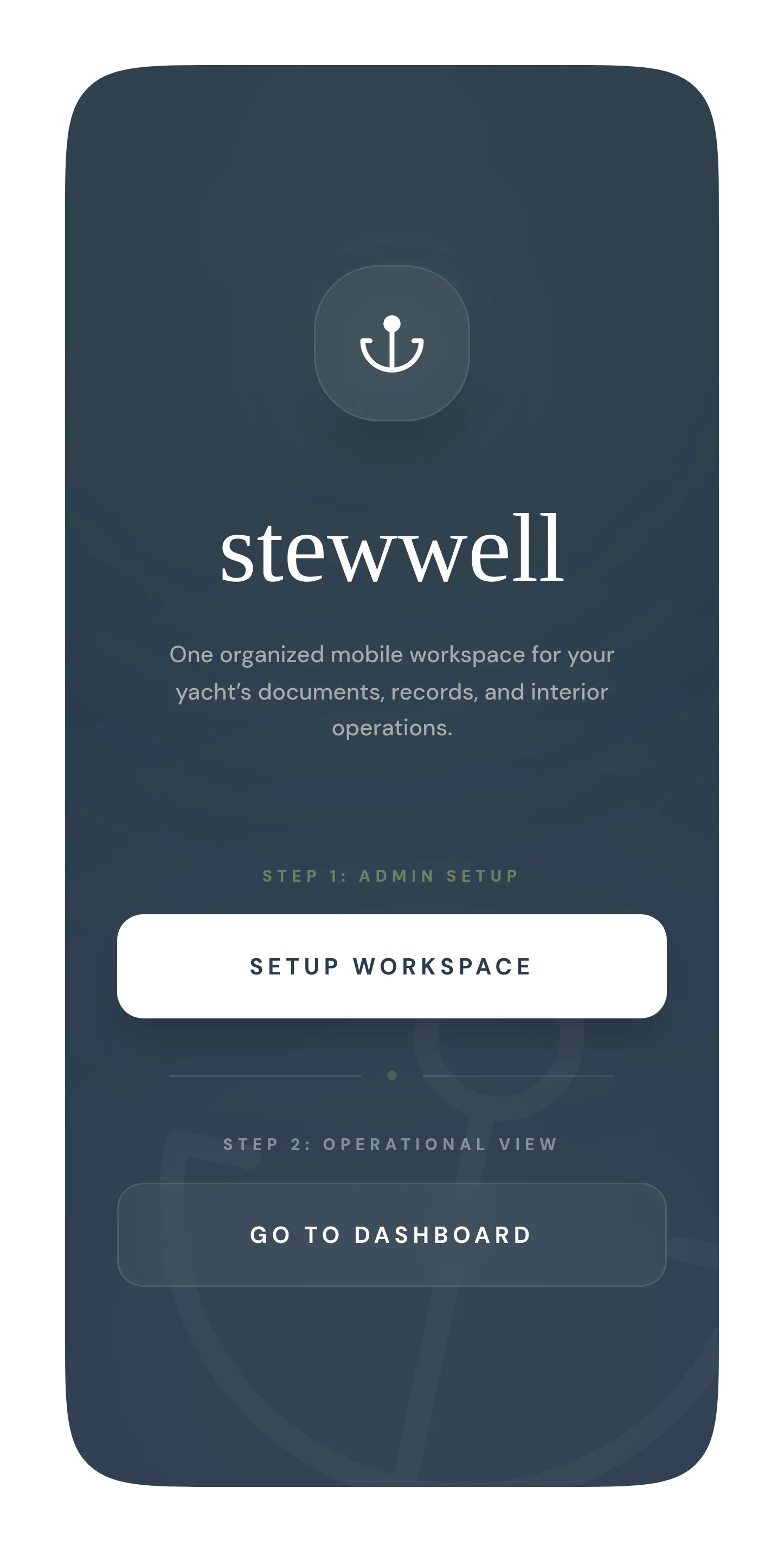
Admin setup, or straight to the dashboard
A six-step wizard, not a settings maze.
Vessel profile, crew accounts, permissions and documents run as a guided wizard. Every step reports its status, so the admin always knows what's left.
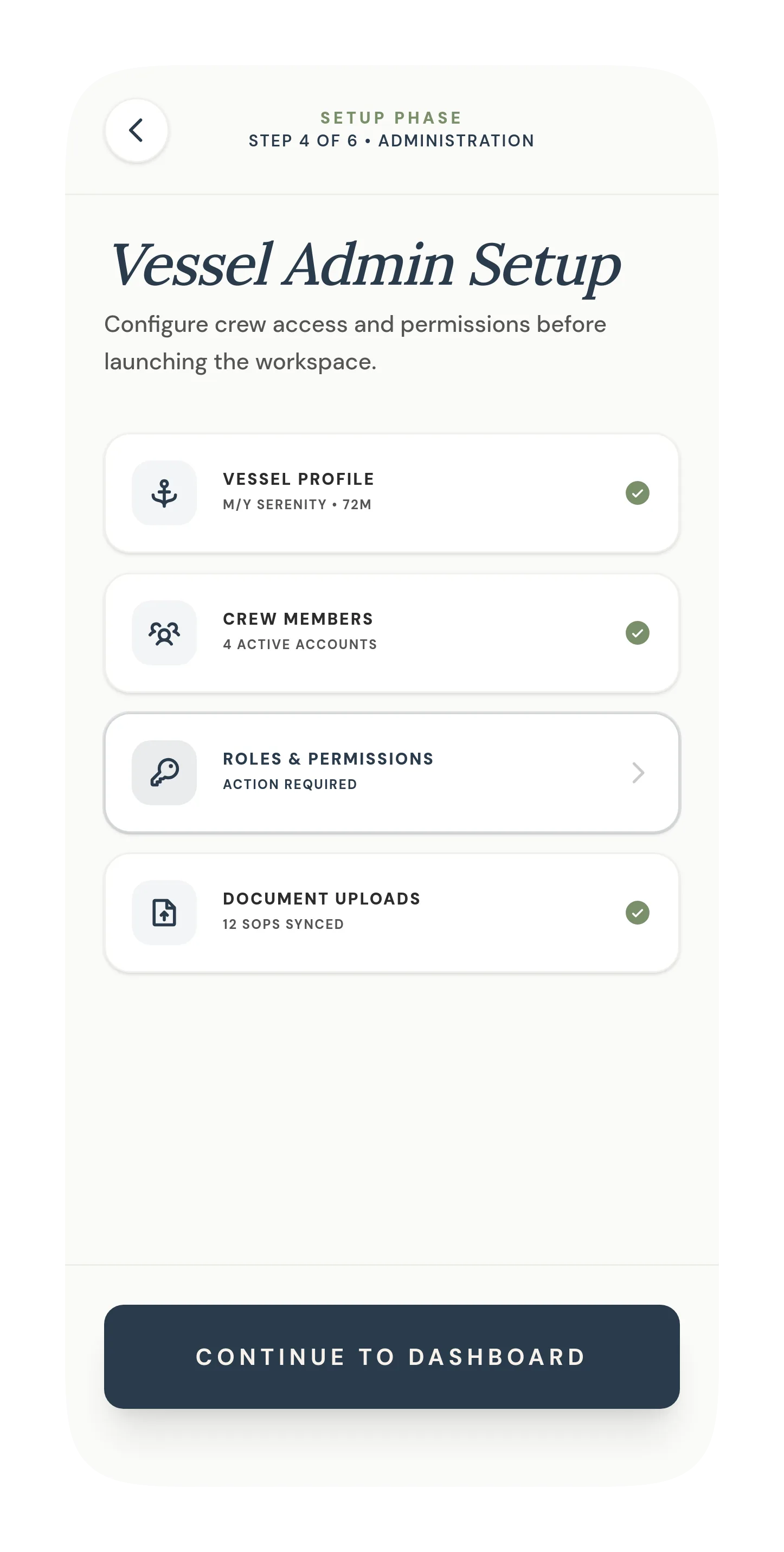
Step 4 of 6, each section with its own status
Upload the spreadsheet. Don't rebuild it.
The decision that shaped the product: crew trust their Excel files and PDF manuals, so Stewwell doesn't ask them to abandon those. SOPs upload as reference PDFs; inventory spreadsheets get parsed into an editable in-app template.
An uploaded INTERIOR_PROVISIONING.XLSX comes back as editable stock lines with quantities and locations intact.
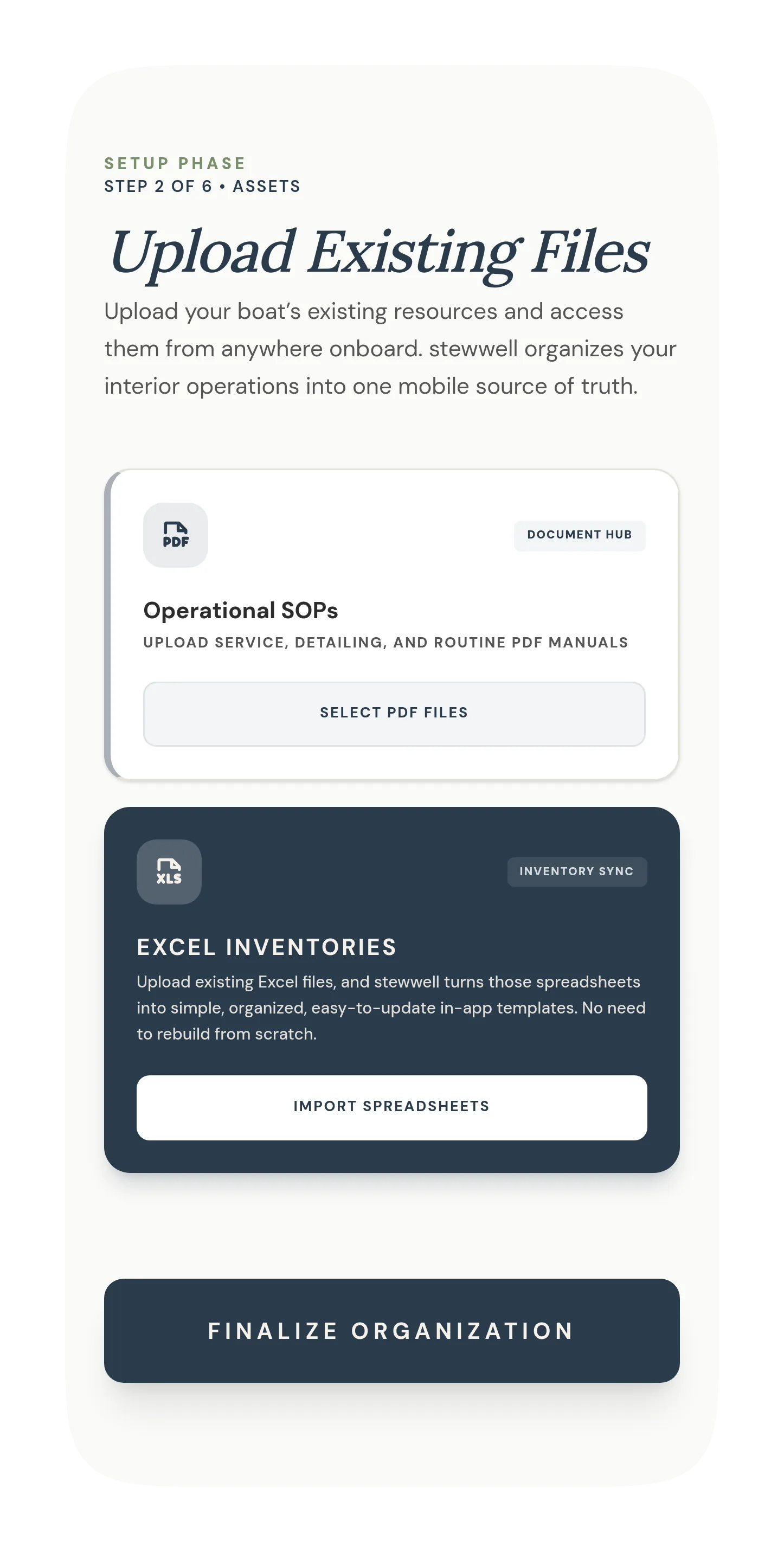
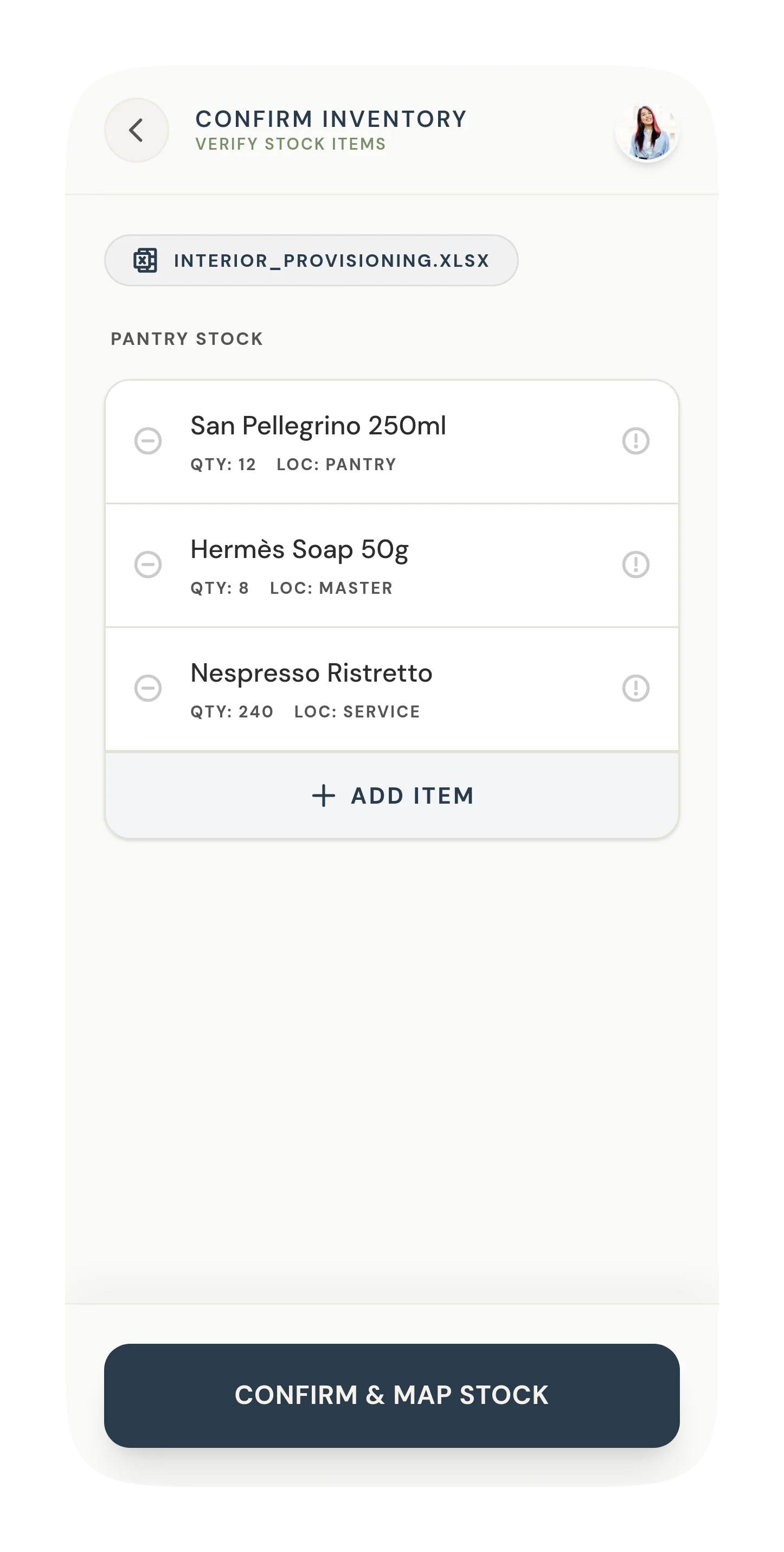
Upload existing SOPs and spreadsheets (left) → the parsed, editable result (right)
A calm home base, then "Detail Cabin 4."
Crew open on a dashboard built for a glance mid-shift. On the task board, work reads as "Detail Cabin 4" and "Restock guest toiletries," grouped by crew member, not "Task #12." That concrete language was one of the clearest wins from founder review.
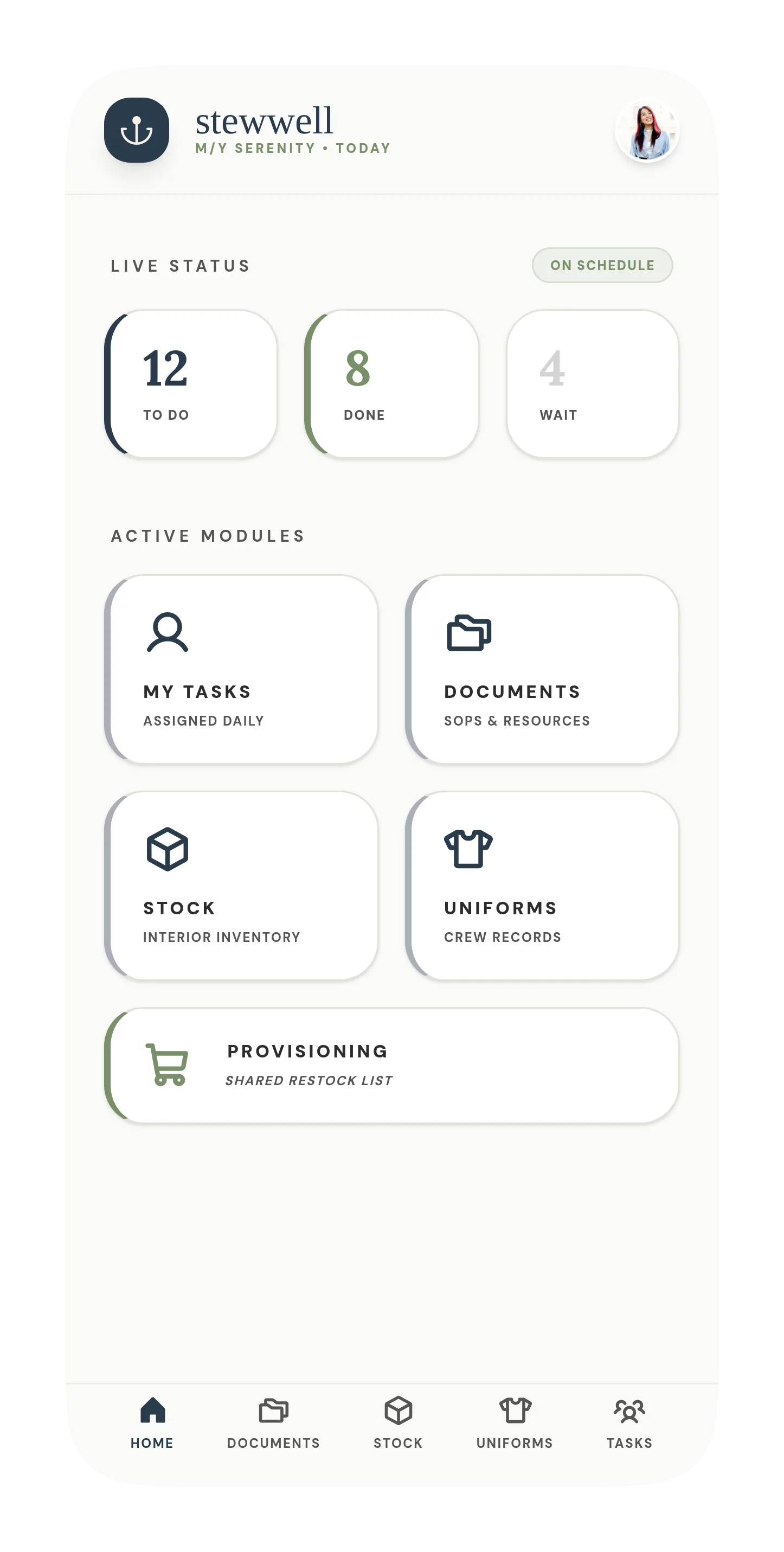
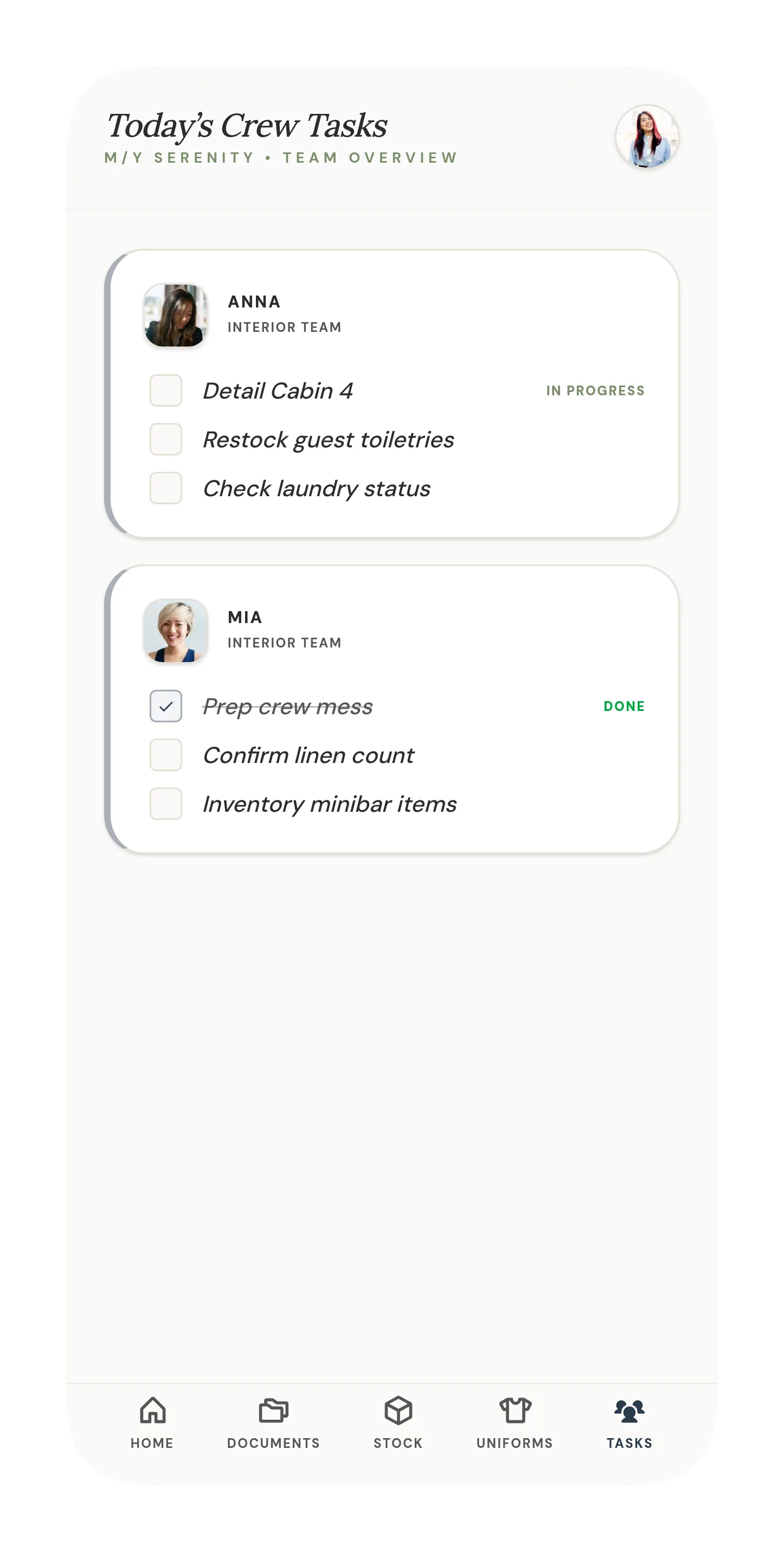
Home (left) and Today's Crew Tasks (right)
The turnover checklist already knows the guest.
When a guest preference applies (hypoallergenic bedding, a minibar item), it surfaces inside the standard SOP steps, flagged as guest-specific.
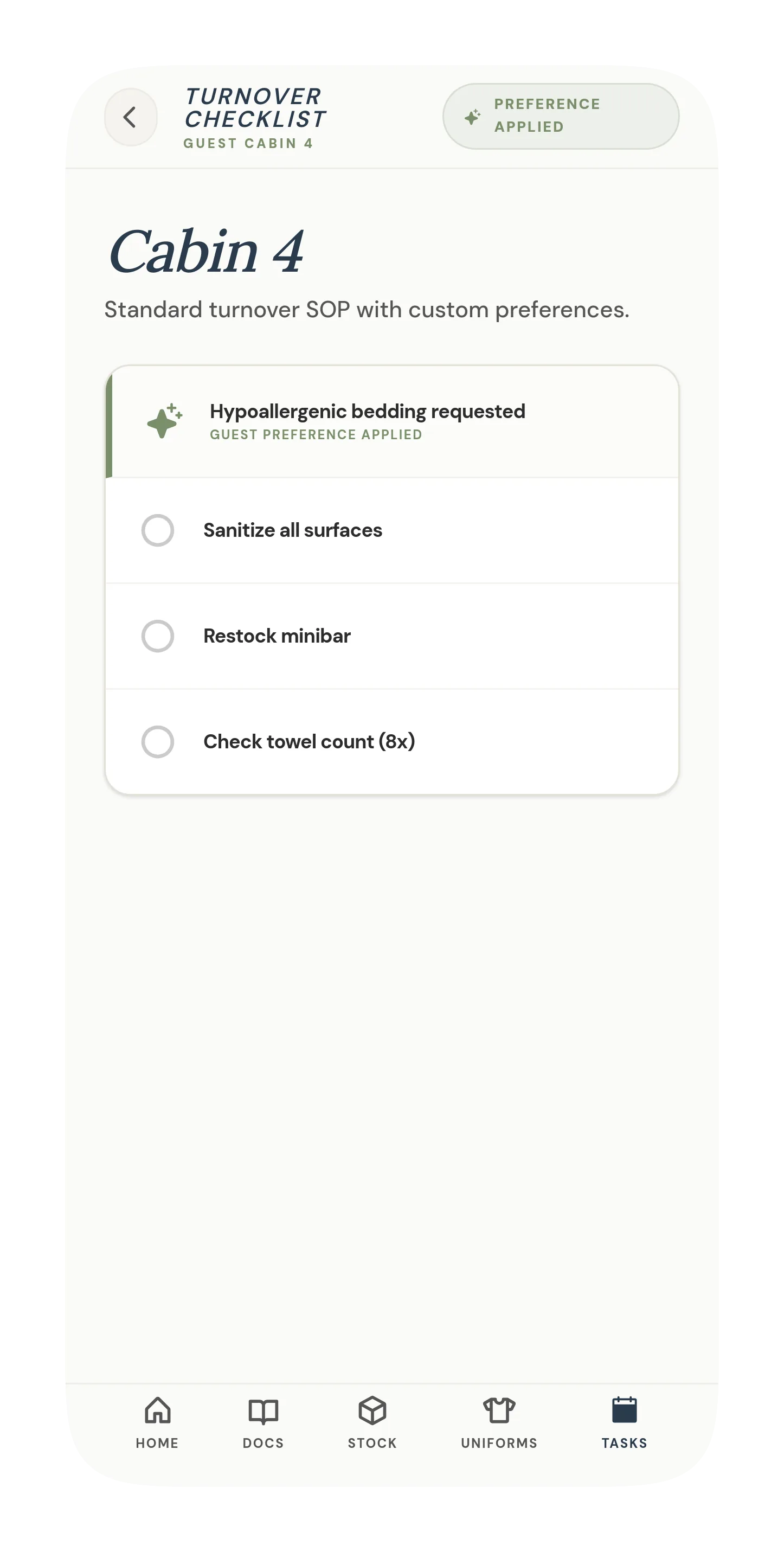
Cabin 4's turnover checklist with a guest preference applied
Par levels that push work forward, not just track it.
Inventory tracks counts against par levels by category. A low-stock alert adds the item to the shared provisioning list, or snoozes it 24 hours, in one tap.
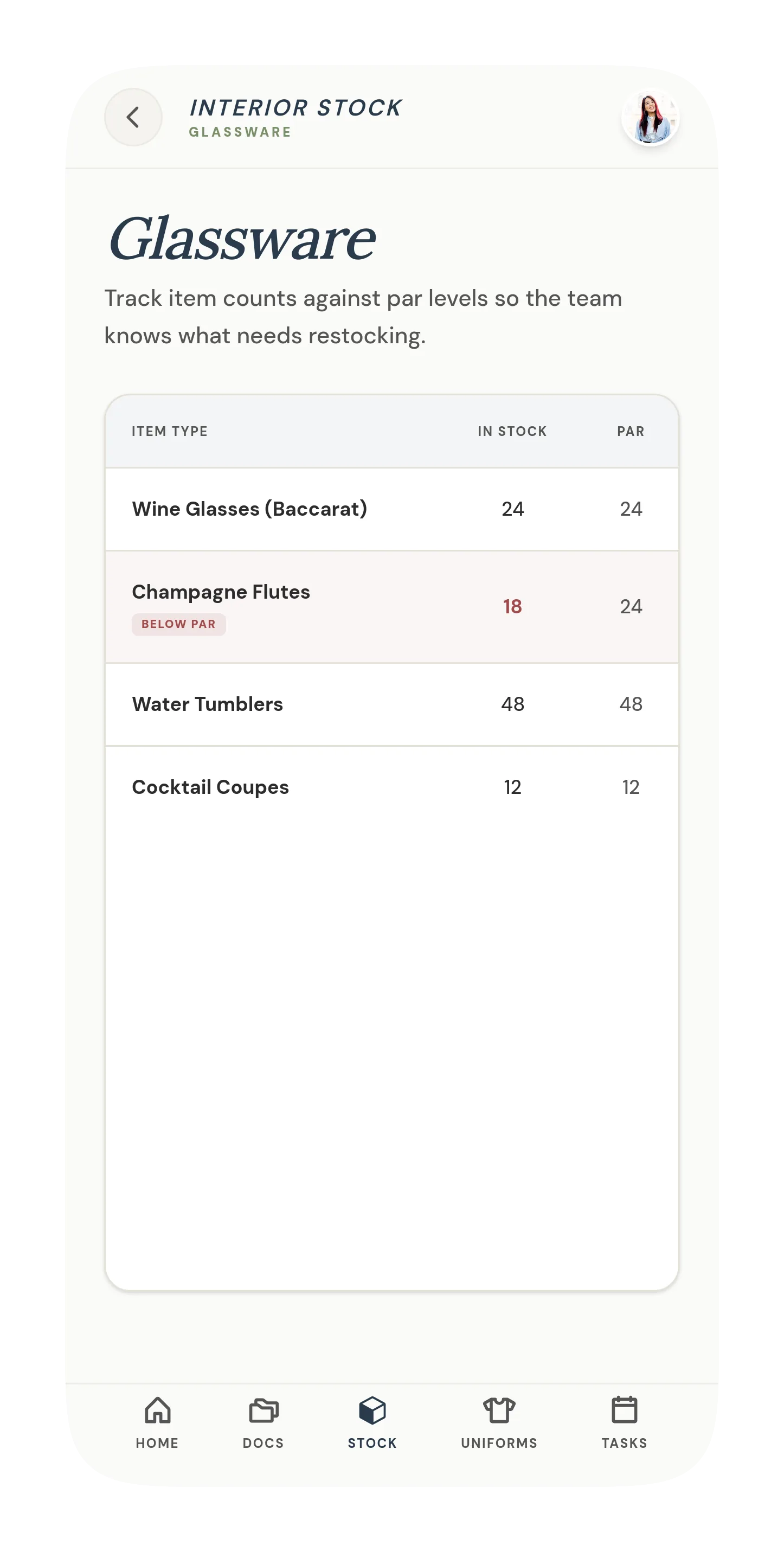
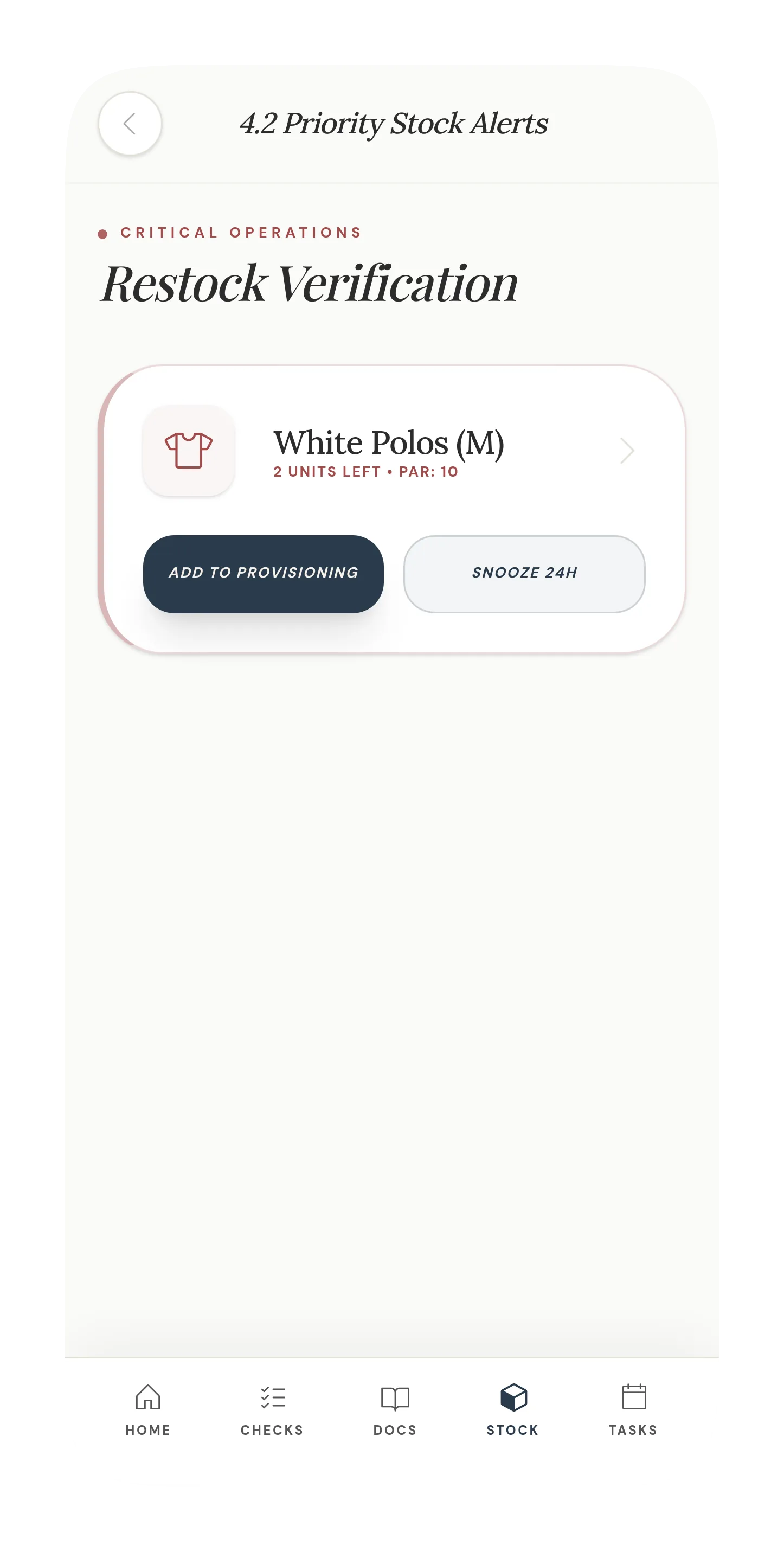
Par-level tracking (left) feeds directly into restock alerts (right)
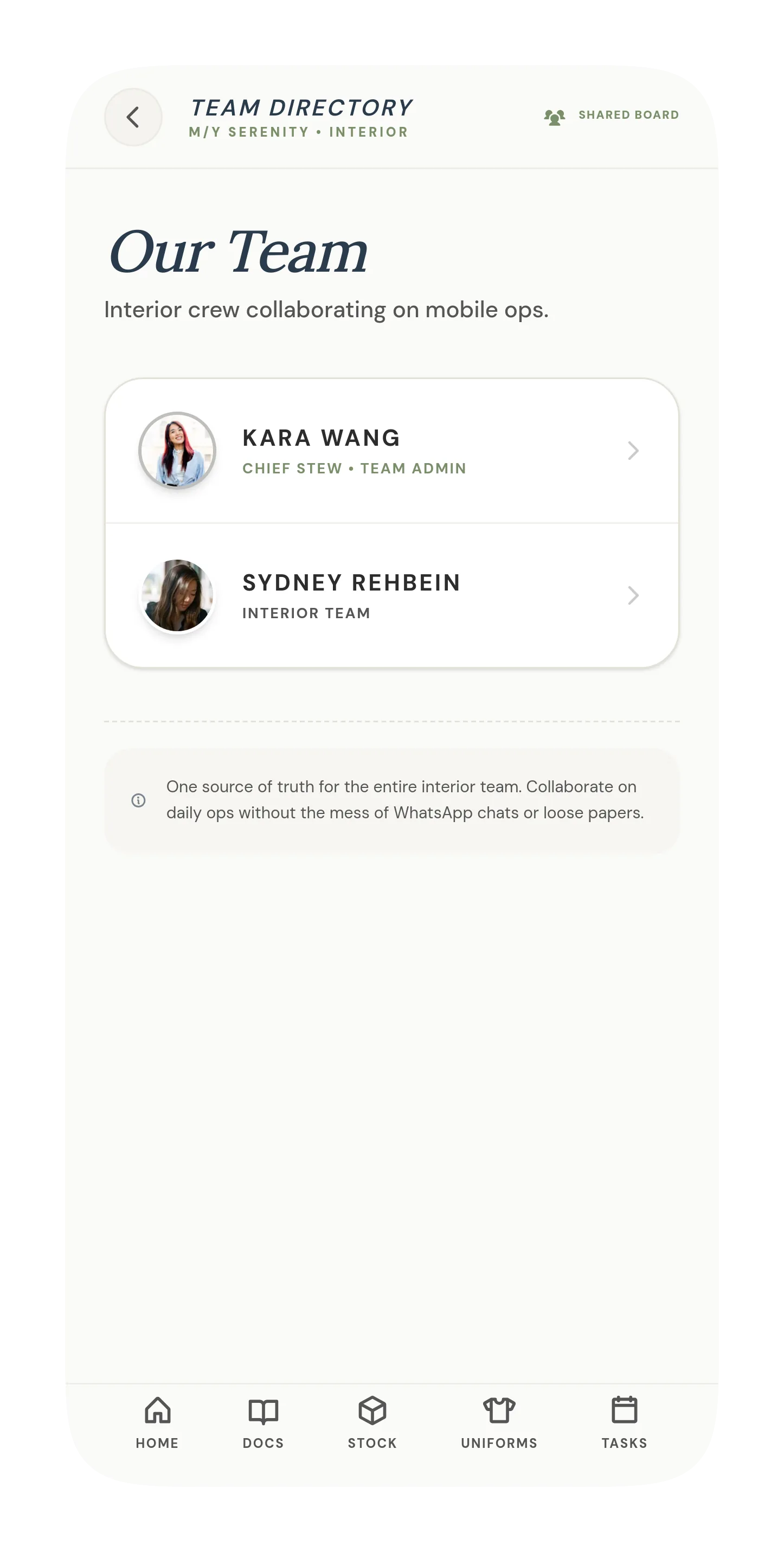
One source of truth for the whole interior team.
A shared directory keeps every role and access level visible, so it's clear who owns what.
Scoping discipline, not just scope.
A fuller guest profile (allergies, cabin and service preferences in one record) was designed but flagged as future vision. Guest preferences go into cabin checklists first, which kept the MVP honest about what can ship and be tested first.
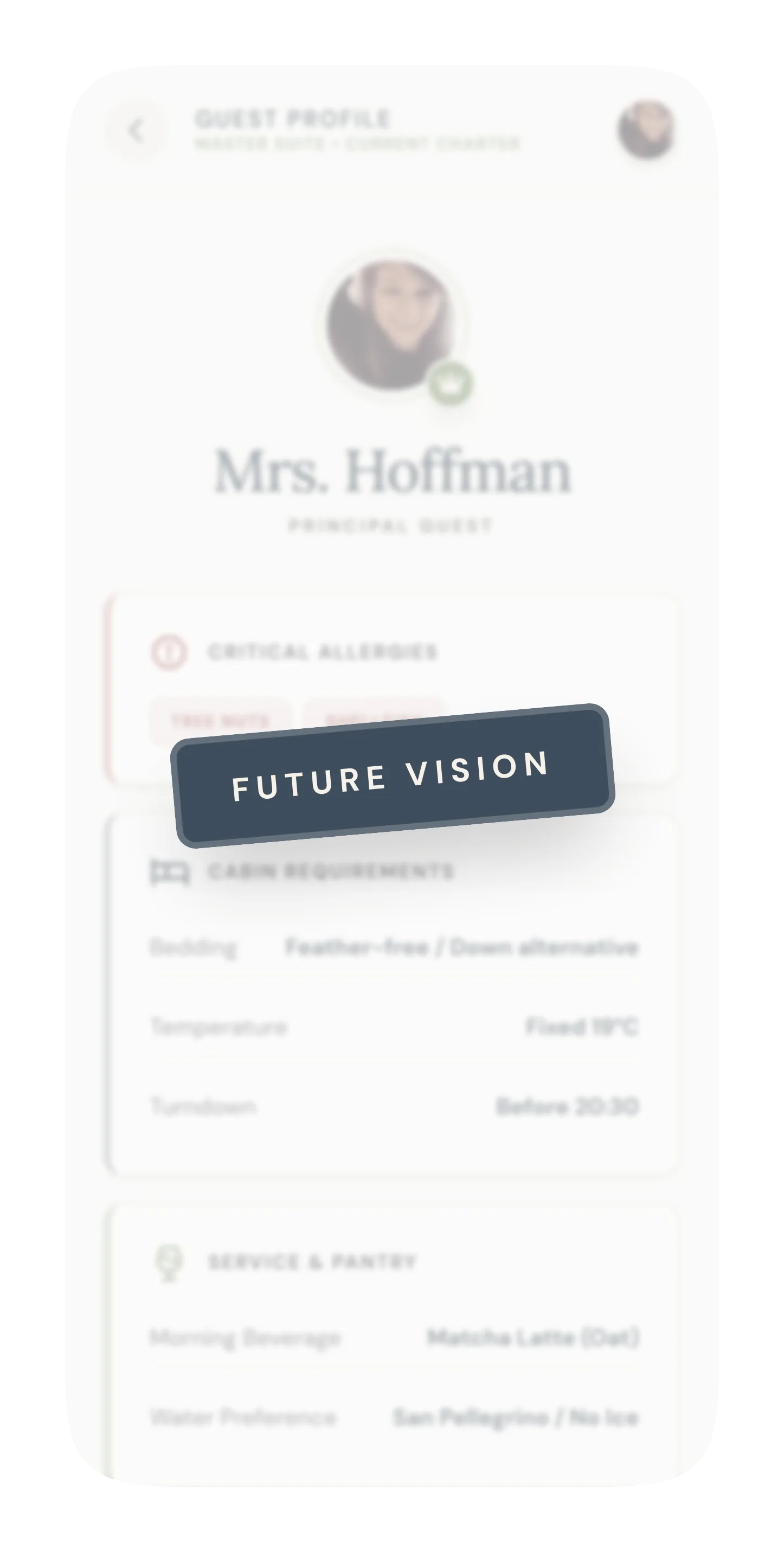
Guest-profile concept, scoped as future vision
Structure with speed, not structure instead of speed.
- Clear labels over clever labels, matching how crew actually work.
- Simple mobile flows, easy to act on while moving around the vessel.
- Operational hierarchy: daily actions on mobile; permissions and setup in admin.
- Founder feedback: several rounds shaped the task board, provisioning, Excel uploads, and what belonged in admin versus v2.
- Premium but functional: polished for a luxury yacht, never decoration over usability.
Product strategy, not just screens.
The most valuable part wasn't the screens: it was turning a founder's industry knowledge into usable workflows and drawing the line between what ships now and what's future vision.