Kai Chatbot
Capital One teams were spending 10 hours a day re-answering the same Slack questions. I led UX and creative direction on the centralized chatbot framework.
Growth lens: adoption. Moved teams onto one shared support assistant: ~60% less time spent in support channels.
10 hours a day. In Slack. Answering the same questions.
Internal tech teams were fielding hundreds of Slack support requests per day, and every team was building its own chatbot. Repeated effort, no shared infrastructure.
The opportunity: centralise the chatbot framework into Kai, one platform any team could train, manage, and measure. My job was to make it usable for teams who had never shipped a chatbot.
20 interviews. Clear pain. Clear direction.
After auditing industry chatbots and existing Capital One tools (including partnering with the Emmi chatbot team), I interviewed 20 users across support teams.
Four consistent needs emerged:
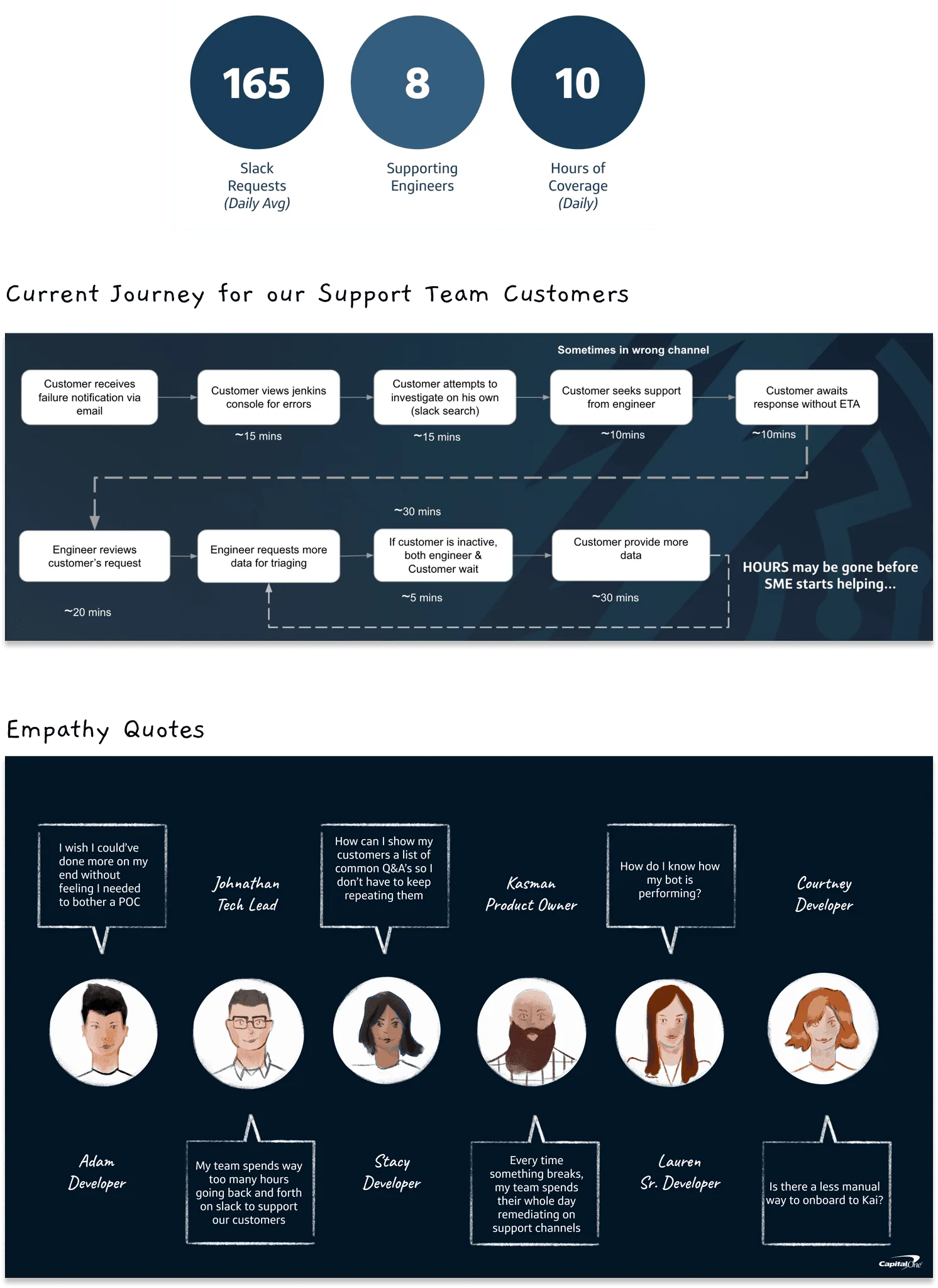
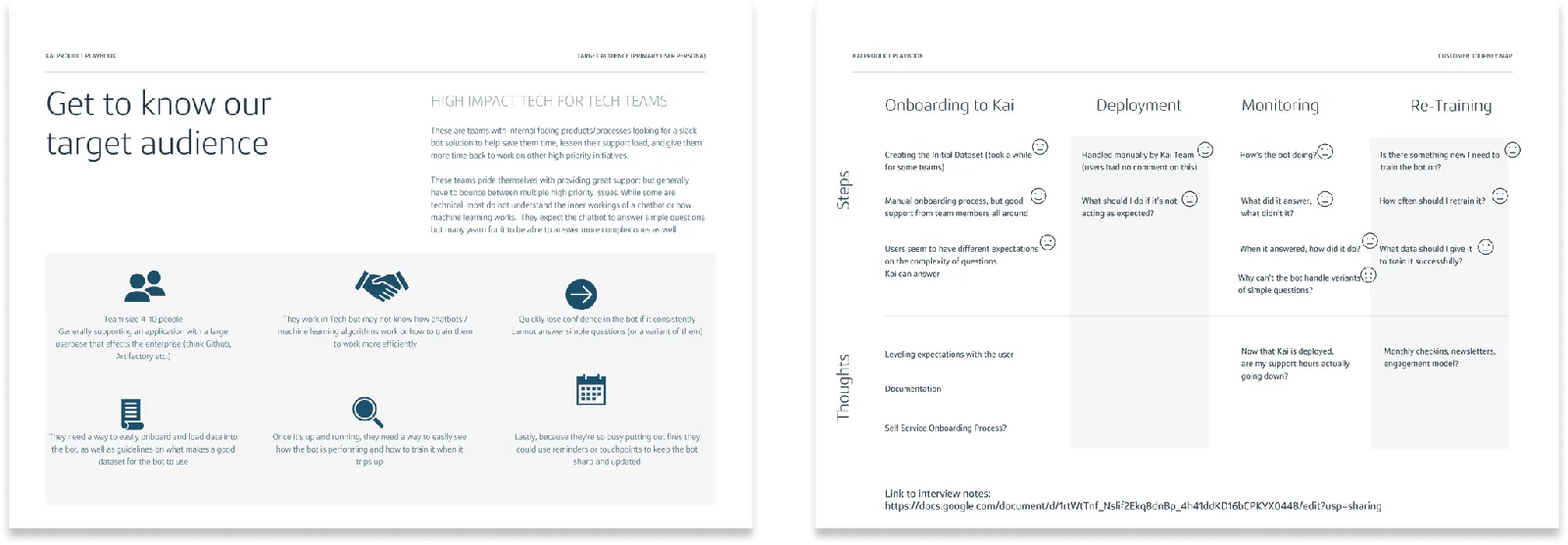
Empathy interviews · 20 users · support team pain points
Mapping the customer, then the system.
I mapped the journey for each customer type (the team onboarding a bot, the end user asking a question) to find the highest friction, then a process flow of every decision point.
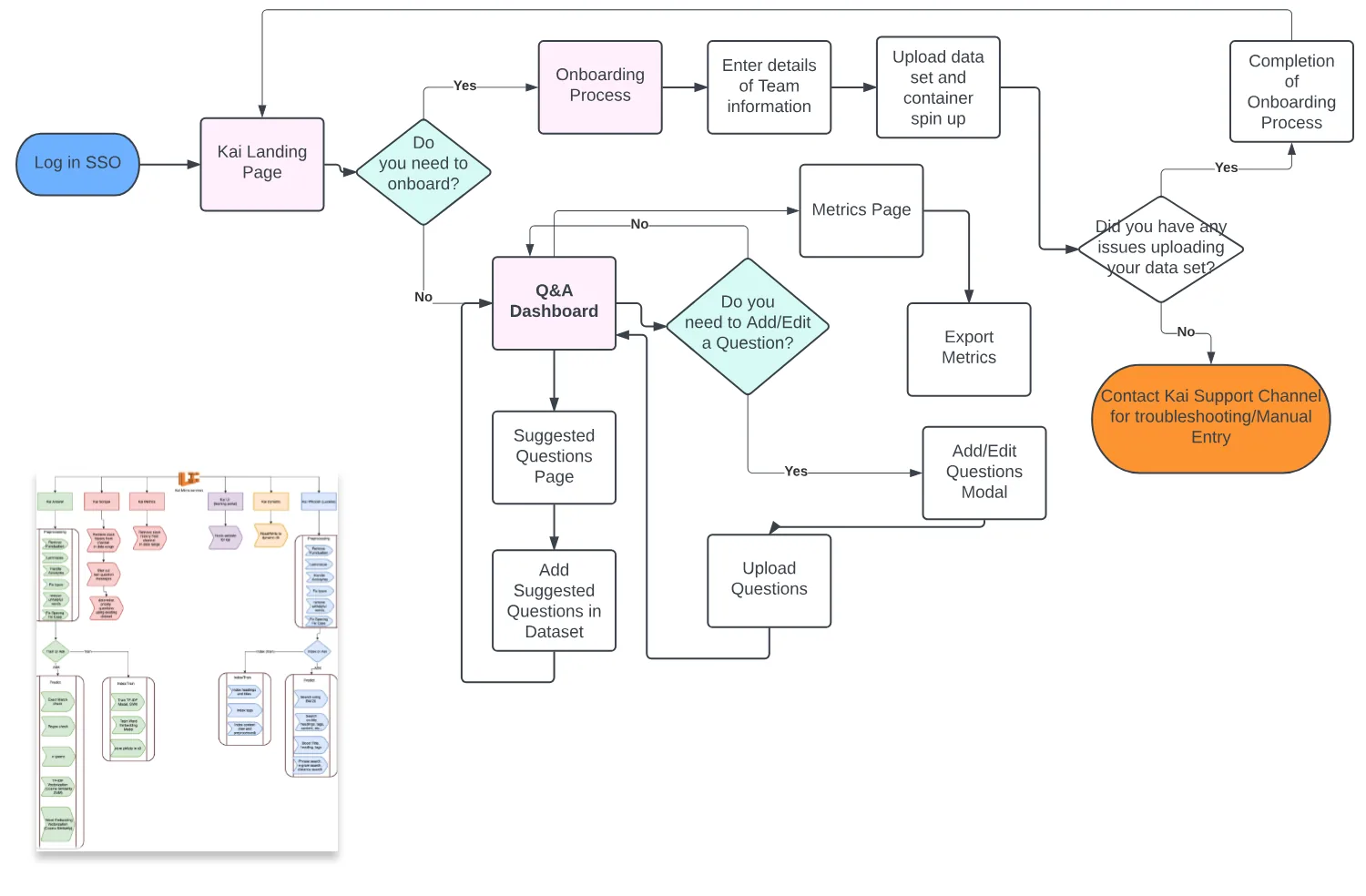
Customer journey map
Process flow · onboarding through active bot management
Hothouses, then focus.
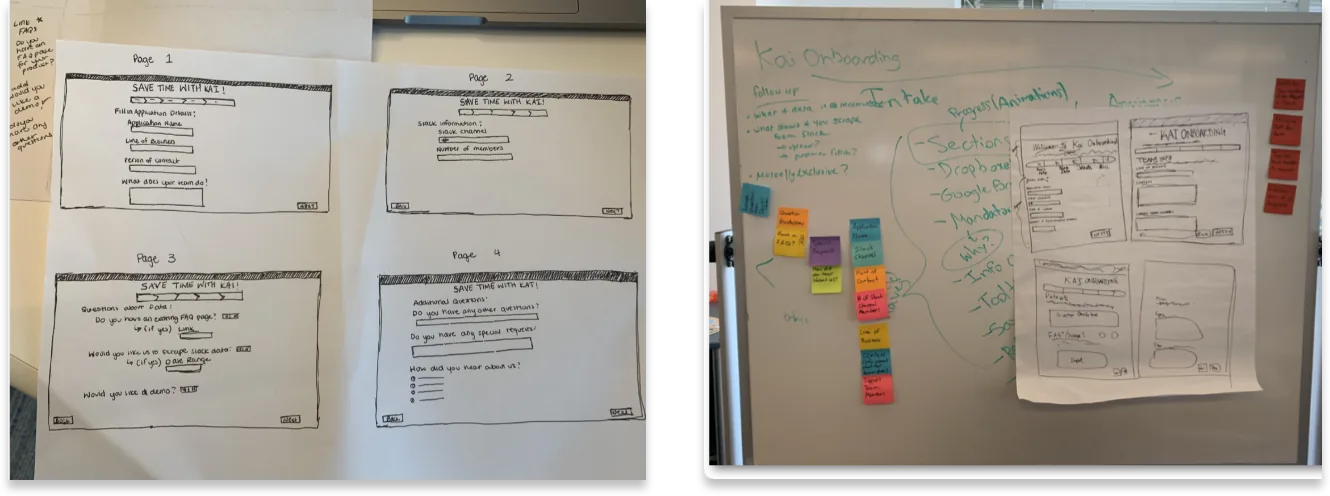
Hothousing sessions explored taking Kai beyond Slack (widgets, email notifications, SMS alerts). A group critique made it clear that adding more channels would complicate the tool, so the focus became the Slack dashboard and one embeddable widget.
Four deliverables. One coherent system.
After wireframing, I moved to hi-fi, owning UX and full creative direction: branding, logo, and iconography.
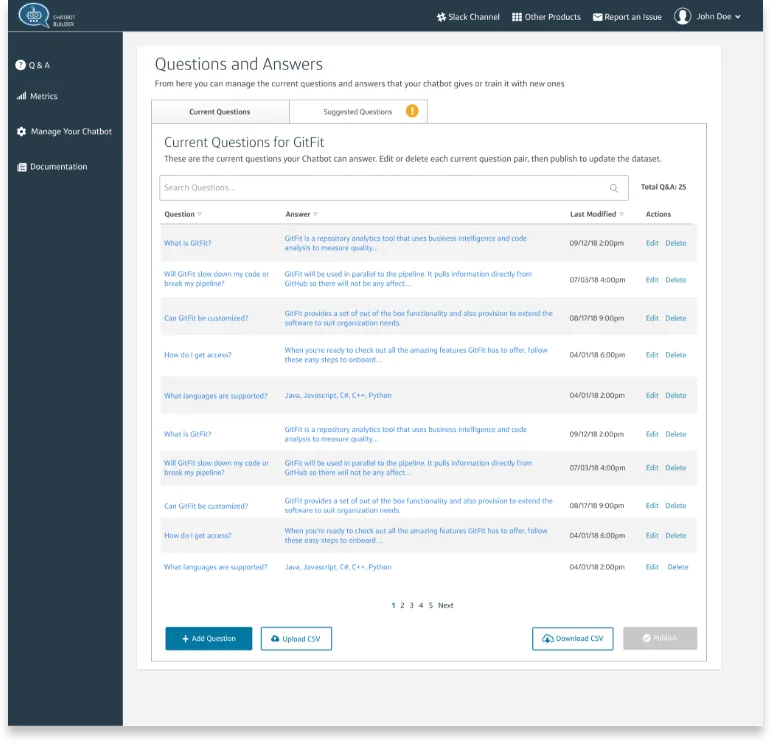
Q&A dashboard · suggested questions
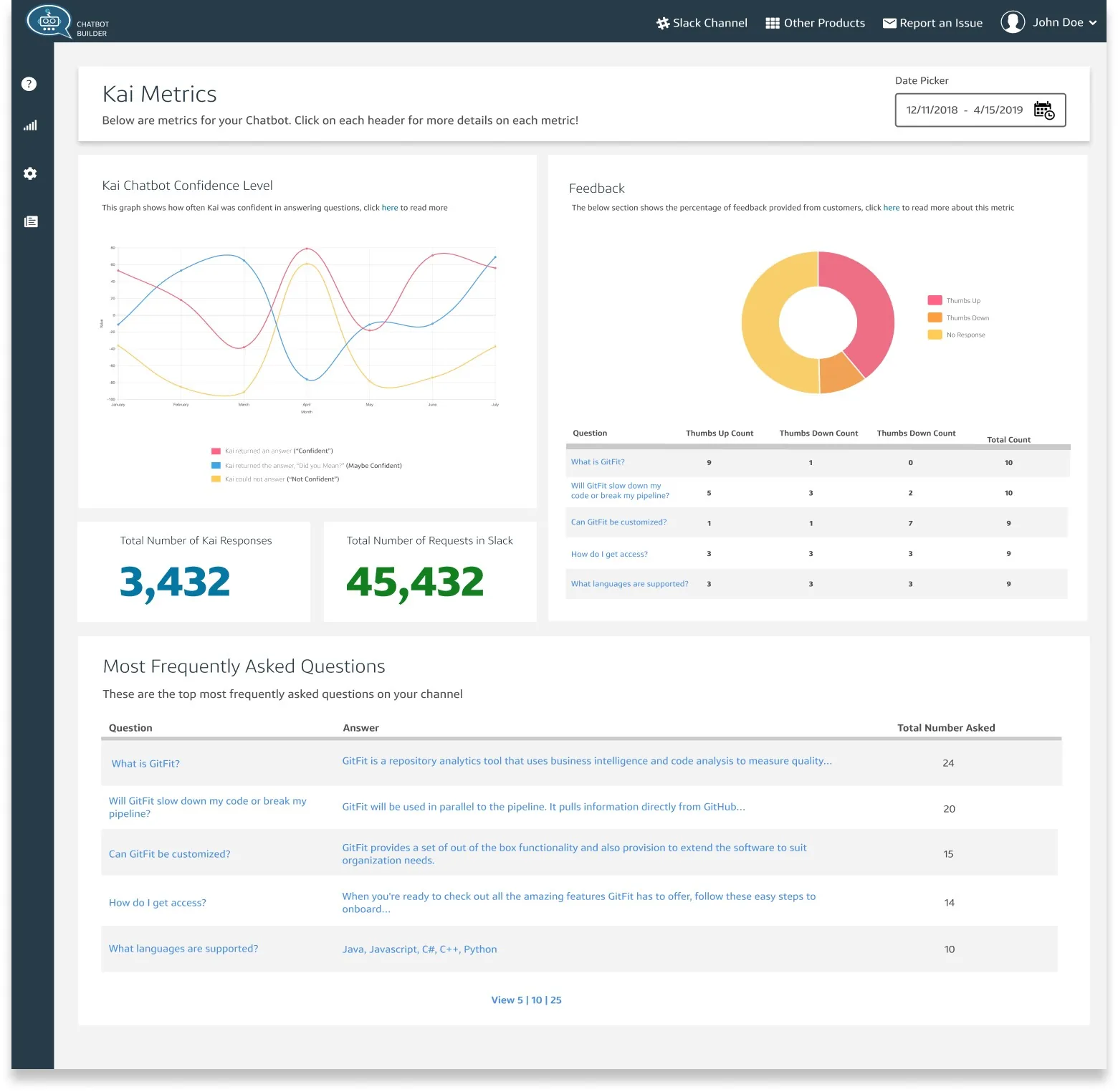
Metrics page · answer rate · usage patterns · performance
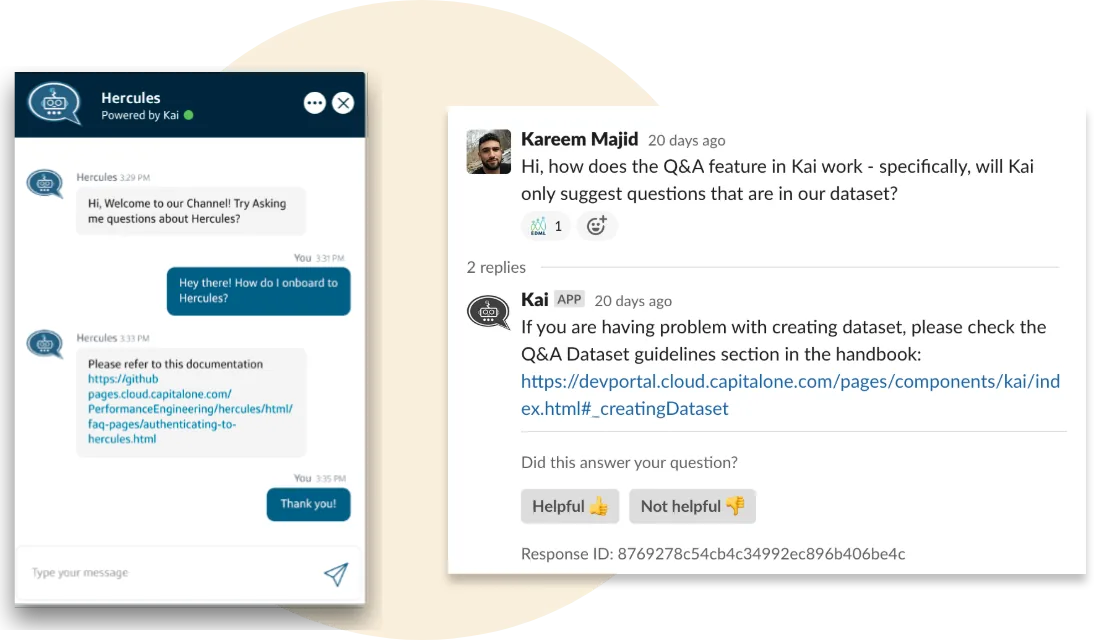
Slackbot + embeddable widget
25-user usability test. Real findings. Real fixes.
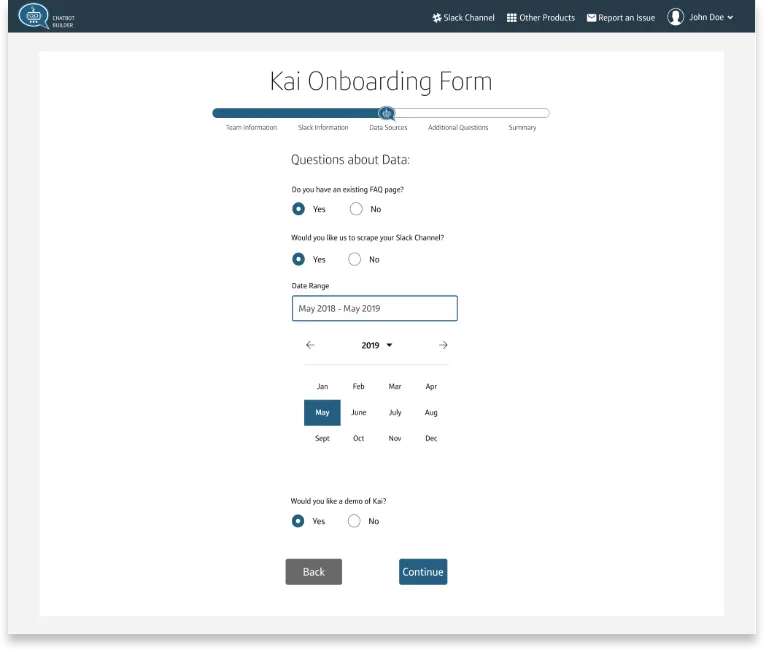
Testing with 25 customers surfaced four issues I fixed before shipping:
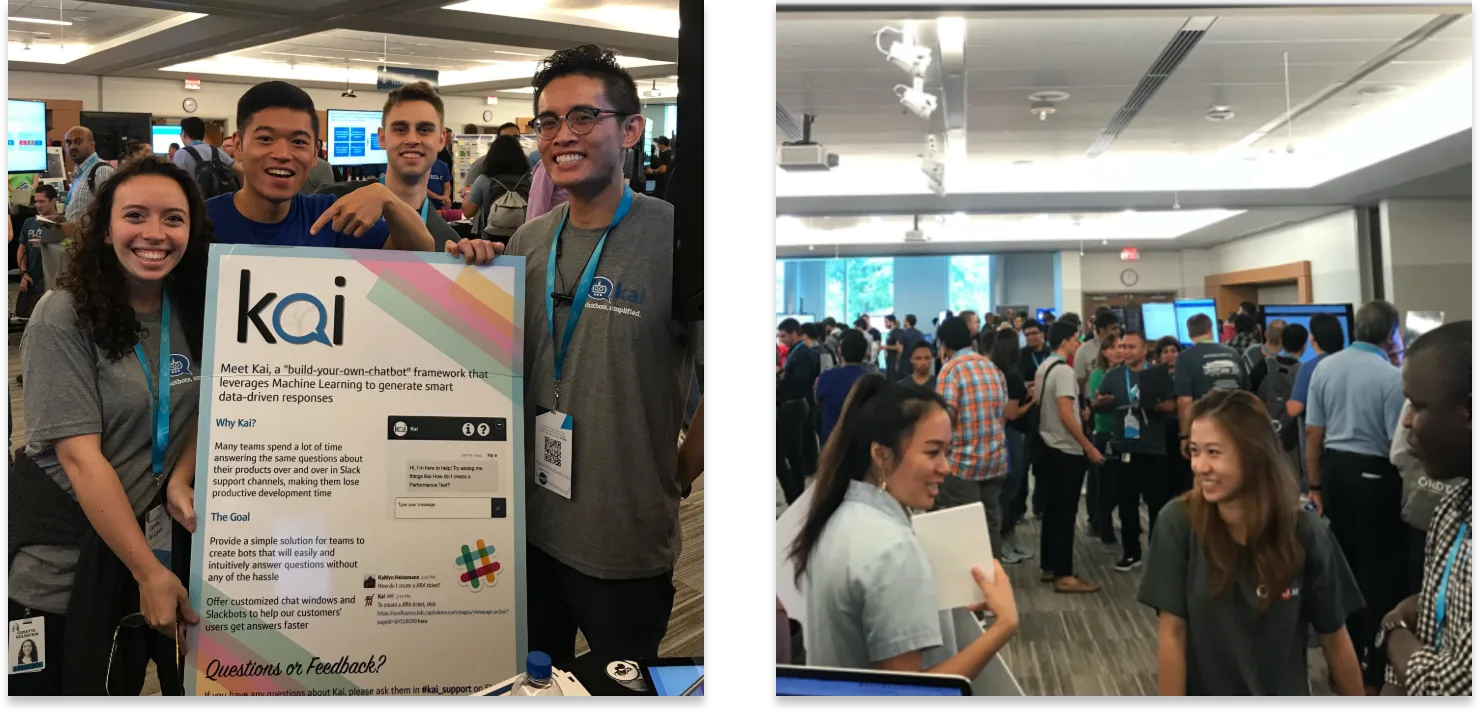
Kai was also demoed at SECON, Capital One's internal engineering trade show; guerrilla interviews with hundreds of engineers fed the next onboarding iteration.
~60% less support time. Shipped. Measured.
The centralised framework eliminated duplicated bot development across the org. The metrics page, driven entirely by user research, became one of the most-used features.
Post-launch · centralised framework live
Bad design in production is expensive.
When I joined, Kai had been tested in production with 20 users with no design process, and the feedback was brutal: visually confusing, missing needed features.
Starting over was the right call, and it reinforced that the fastest path to shipping good product is doing the user research first.