5
Villas. One site. Designed, procured, and delivered end-to-end.
2 of 5
Sold pre-completion, without a sales agent or marketing budget
0→1
PT PMA entity, land deal, BOQs, vendor contracts, brand, all built from scratch
10–21%
Projected annual ROI modeled across three occupancy scenarios
Jun '26
First delivery on schedule. Villas 2 and 3
My role
I ran this end to end.
Founder-led.
I set up the company, negotiated the land, wrote the BOQs, managed four vendor streams in parallel, built the brand, and sold two units without a sales team, all while living remotely. This is what zero-to-one looks like outside of software.
What I owned
Architectural direction & interior concept
Materials sourcing & BOQ control, line by line
Vendor selection & parallel management (structure, glazing, MEP, finishes)
Construction oversight & milestone inspection system
Brand strategy, naming, and visual identity
Investor deck, narrative, design, and financial modeling
Villa pricing strategy & positioning
Buyer communication, contracts, and handover planning
Site team
Local Bali contractor, 6 years in Pererenan
Licensed Indonesian PPAT notary
Independent QS for milestone sign-off
Architect. GOGUN / Gunawan
Project manager, on-site
Construction status · May 2026
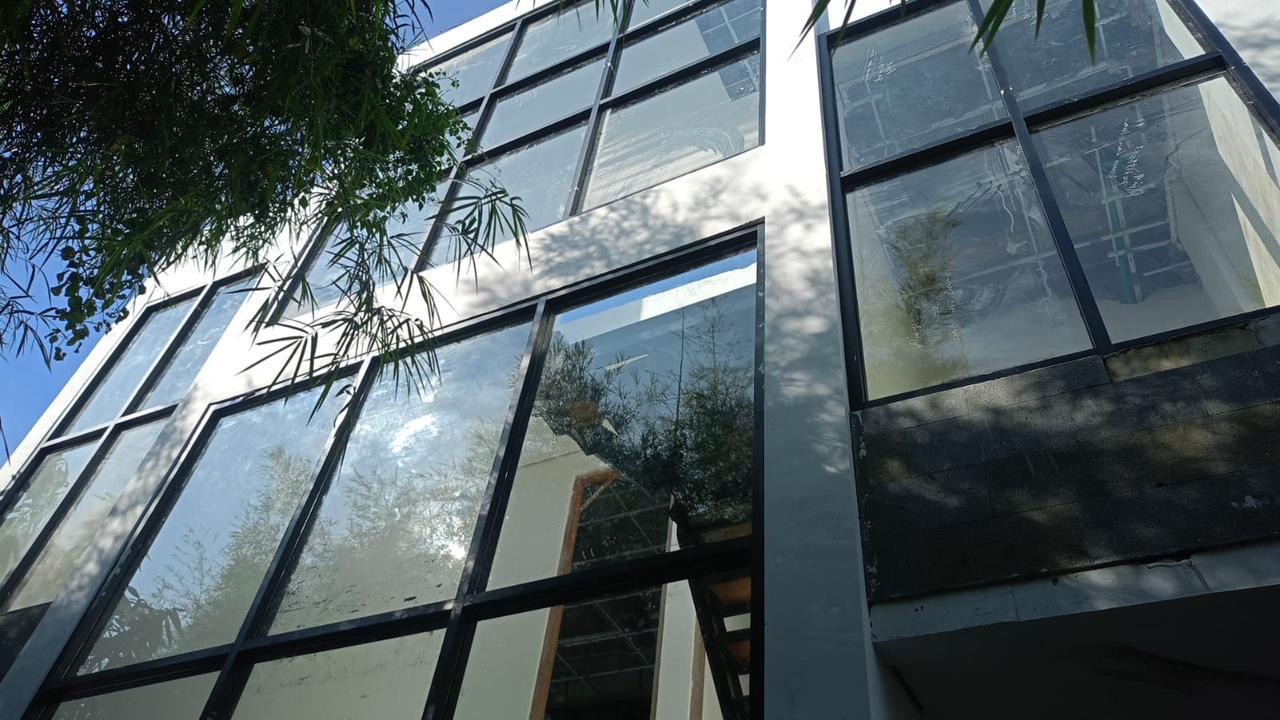
Black-frame glazing installed
Slatted ceiling works underway
Kitchen / living structure complete
Bathroom layouts and MEP installation in progress
The challenge
Most people hire a developer. I was the developer.
The challenge isn't the villa itself. It's the infrastructure around it: setting up a PT PMA entity in Indonesia, negotiating a 27.5-year leasehold, writing vendor contracts that actually protect you, building a BOQ that prevents scope creep before ground breaks, and maintaining buyer confidence from 8,000 miles away when construction doesn't move in a straight line.
Everything a developer normally delegates, architect briefing, material procurement, contractor management, buyer due diligence, legal coordination, brand positioning. I handled directly. The question I kept asking was: what does a product manager do when the product is concrete and the sprint is six months long?
The answer: you define the spec tightly upfront, you build quality gates into every milestone, and you make sure the person running the site is accountable to documentation, not just to your trust.
How I thought about it
Four decisions that shaped how this was built.
BOQs as source of truth. Before breaking ground, I built detailed bills of quantities for every trade: structure, glazing, MEP, finishes. Each line item was a real decision, local material vs. imported, cheaper but variable vs. reliable but costlier. The BOQ became the contract, the inspection checklist, and the dispute-resolution document. When a vendor tried to substitute materials mid-build, I had the paperwork. They didn't.
Move from single contractor to direct vendor management. The original setup: one local contractor managing the full site. The risk: single point of failure, opaque markup on materials, no line-of-sight into subcontractor quality. Decision: restructure to direct management of parallel crews for structure, glazing, MEP, and finishes. Harder to coordinate. Significantly lower cost. And I can see exactly what's happening at any time.
Separate visual progress from real progress. Construction looks busy even when critical work isn't happening. I built a photo-evidence inspection system at each payment milestone, not "the walls are up" but "the rebar spec matches the engineering drawing." Payment releases require documentation, not just site photos. This removed a major class of dispute risk.
Every design decision filtered through rental math. Double-height ceilings photograph well and command a rental premium. Black-frame steel glazing is durable and maintenance-light under occupancy. Terrazzo counters outlast marble in a rental context. None of these were purely aesthetic choices, each was evaluated for durability at scale, photography value, and buyer perception at resale. The villa is a product. The guests are users. The owners are the customers.
The architecture
A double-height room, framed in black steel.
Each villa is a single mezzanine volume, 5.4m ceilings, floor-to-ceiling glazing, an island kitchen anchoring the living room, a private plunge pool off the garden. Every material decision was made against two filters: how does this perform under rental occupancy, and how does this photograph for short-term rental listings?
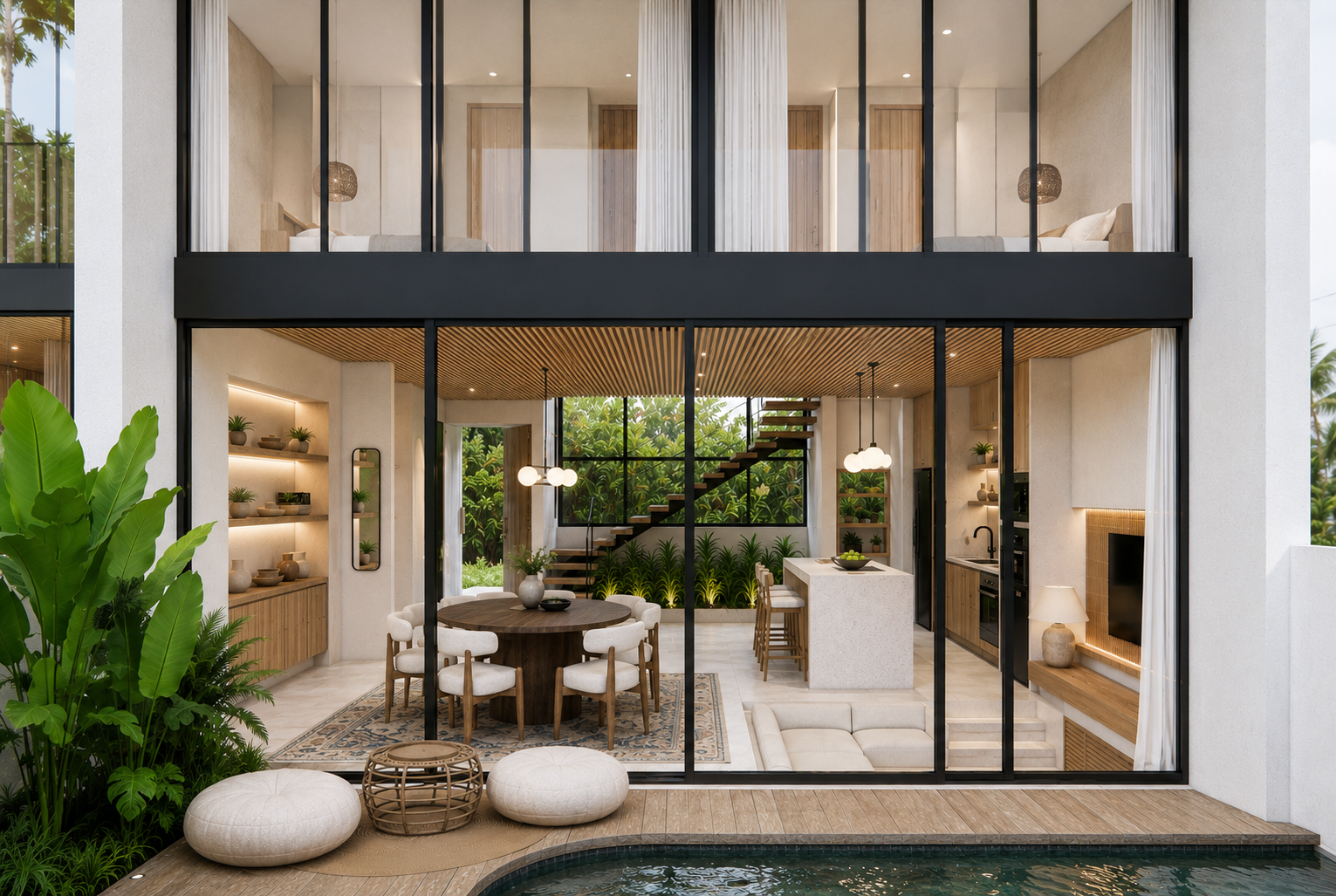 Front elevation · double-height room · mezzanine above
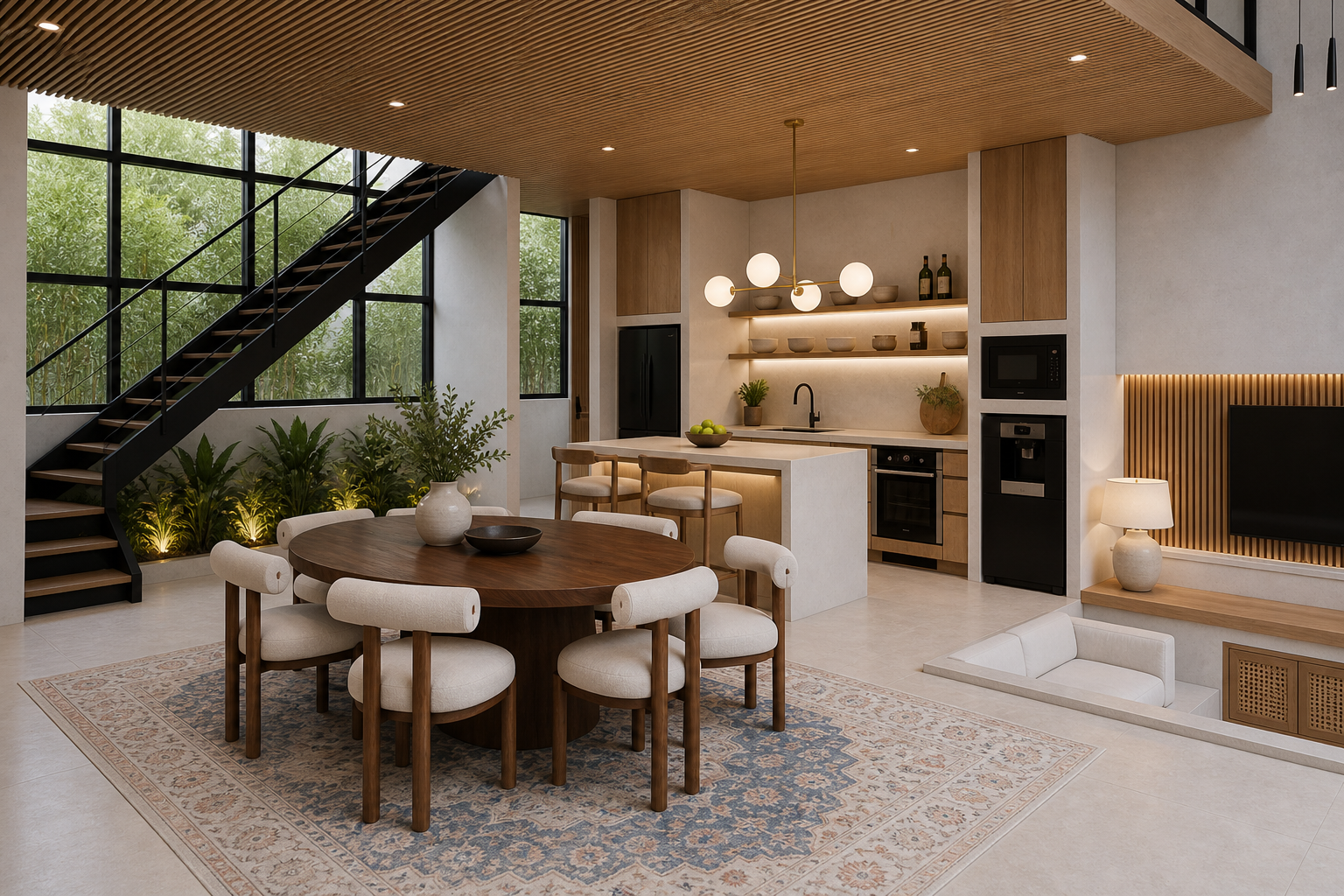
Ground floor · dining, kitchen, floating staircase
Front elevation · double-height room · mezzanine above
Ground floor · dining, kitchen, floating staircase
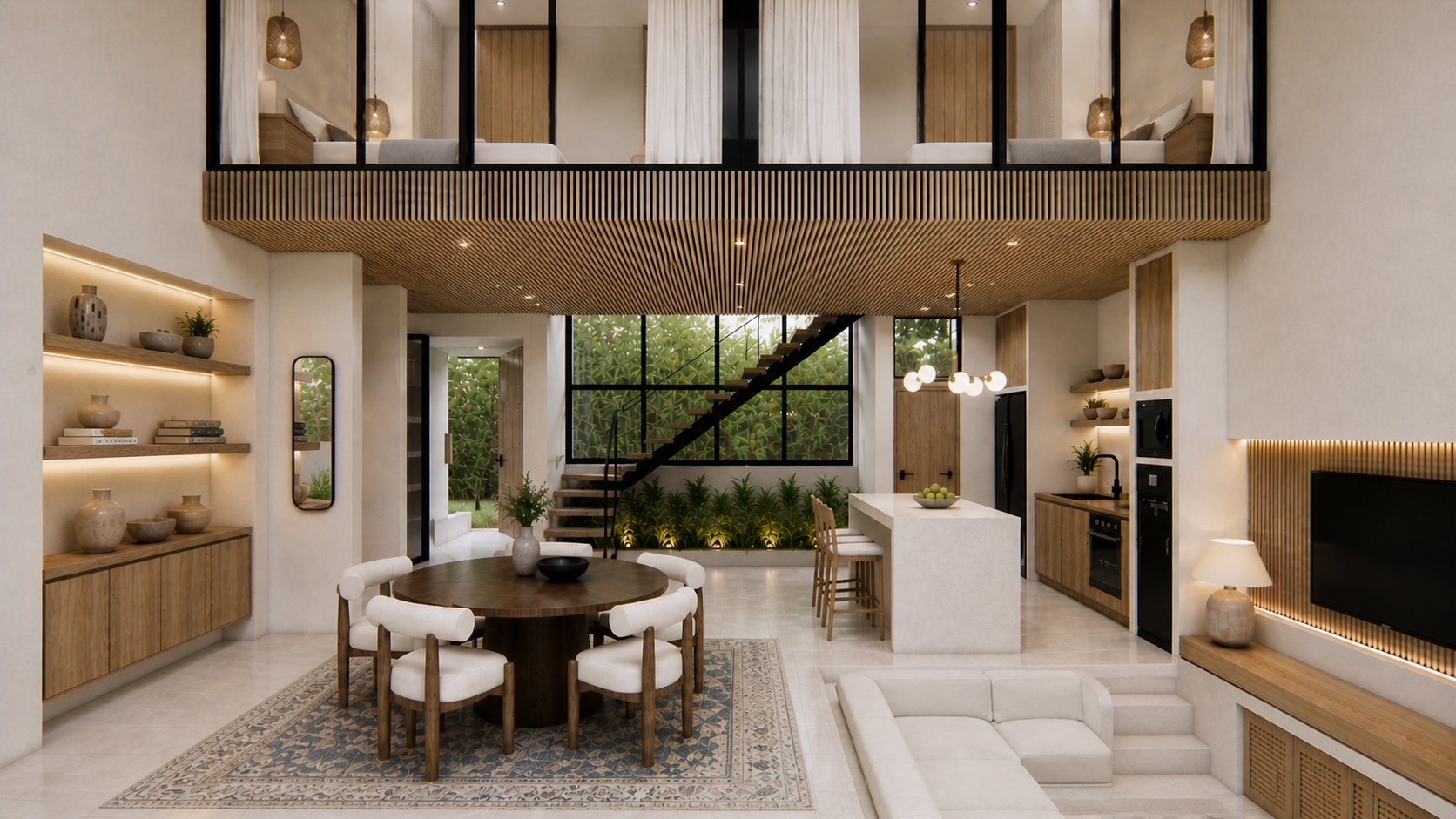
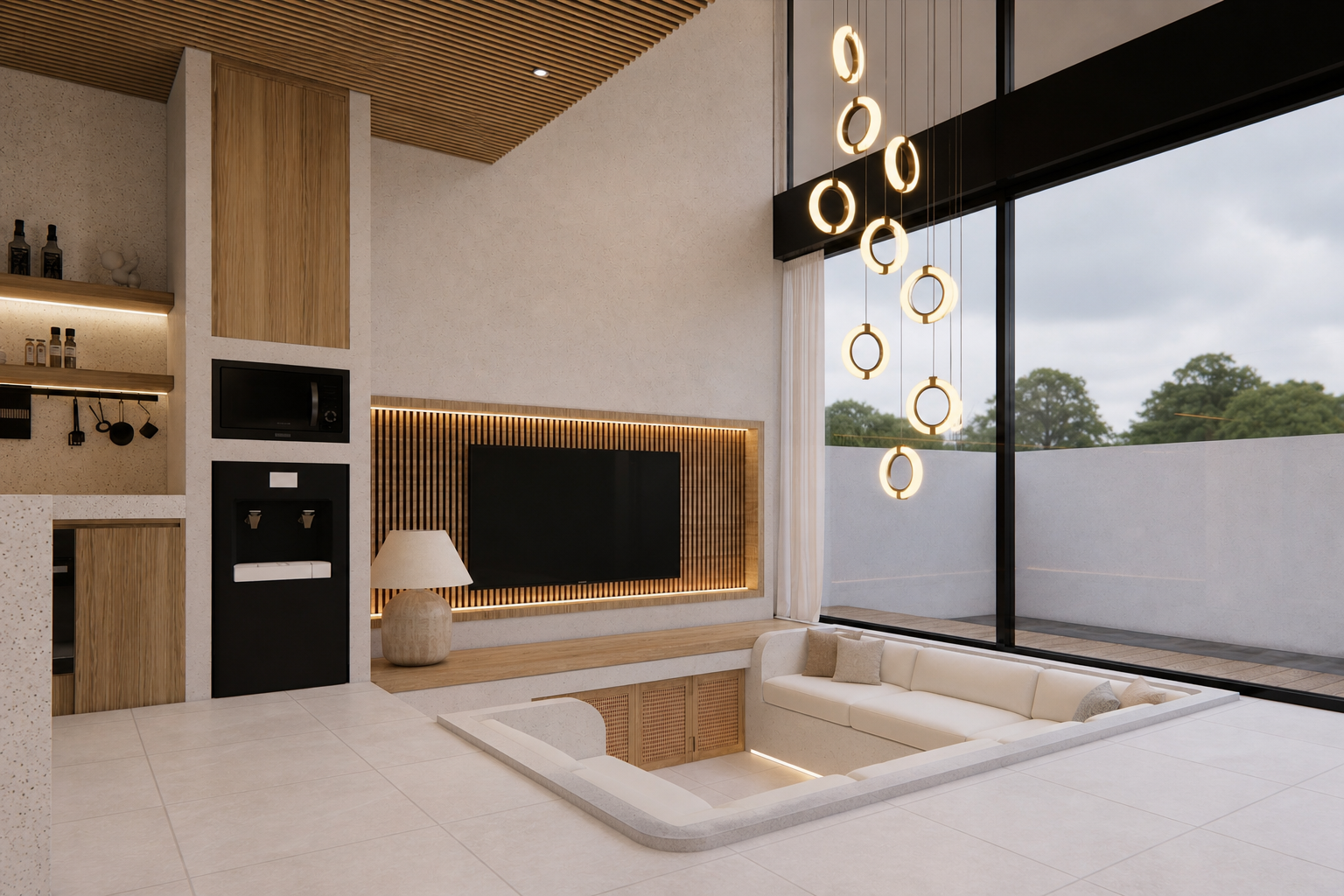 Sunken lounge · slatted teak ceiling · built-in millwork
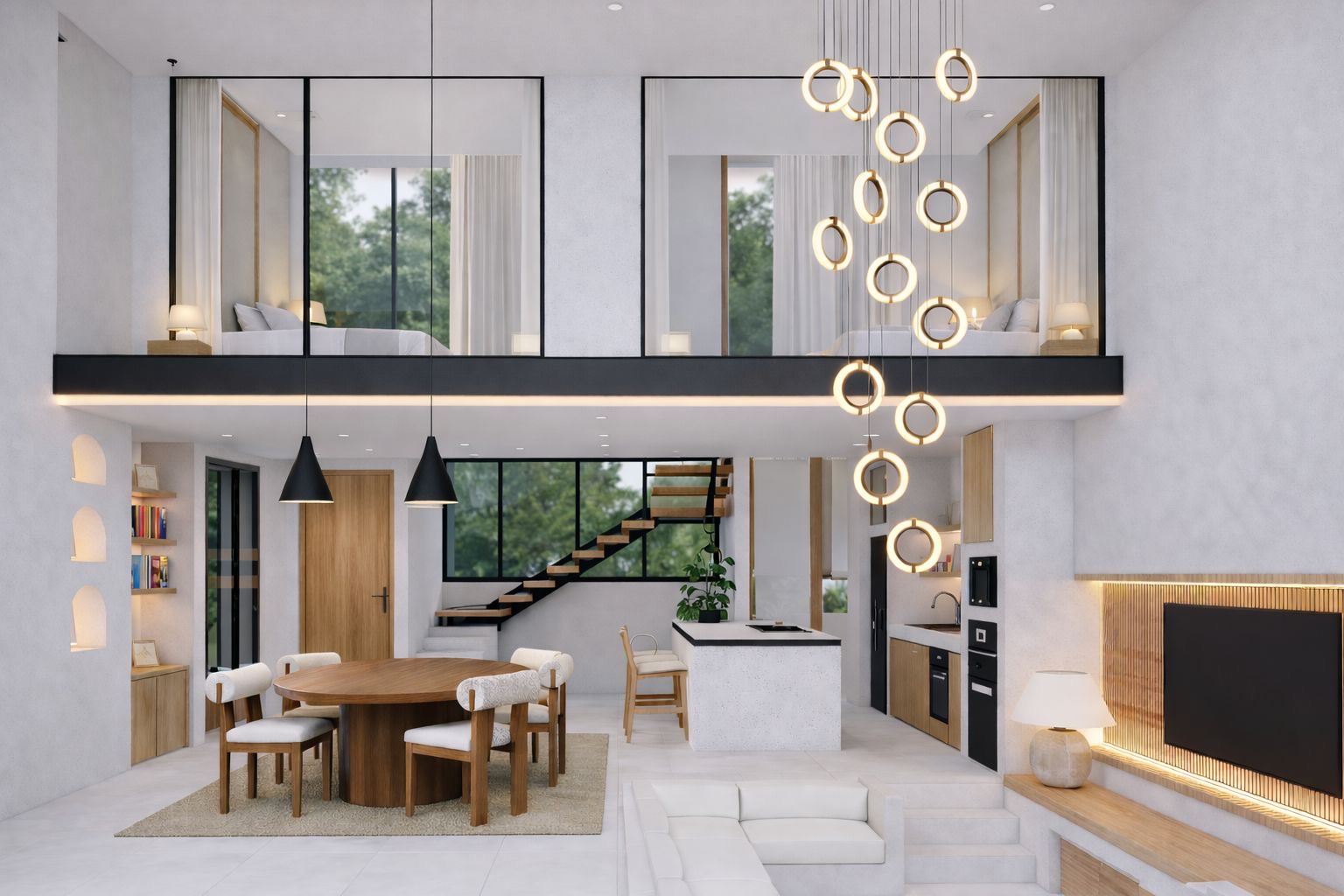 Double-height room · pendant chandelier · mezzanine rail
Ground floor, one continuous climate-controlled room. Island kitchen, sunken lounge, glass folding open to the pool deck. Polished concrete, slatted teak ceiling.
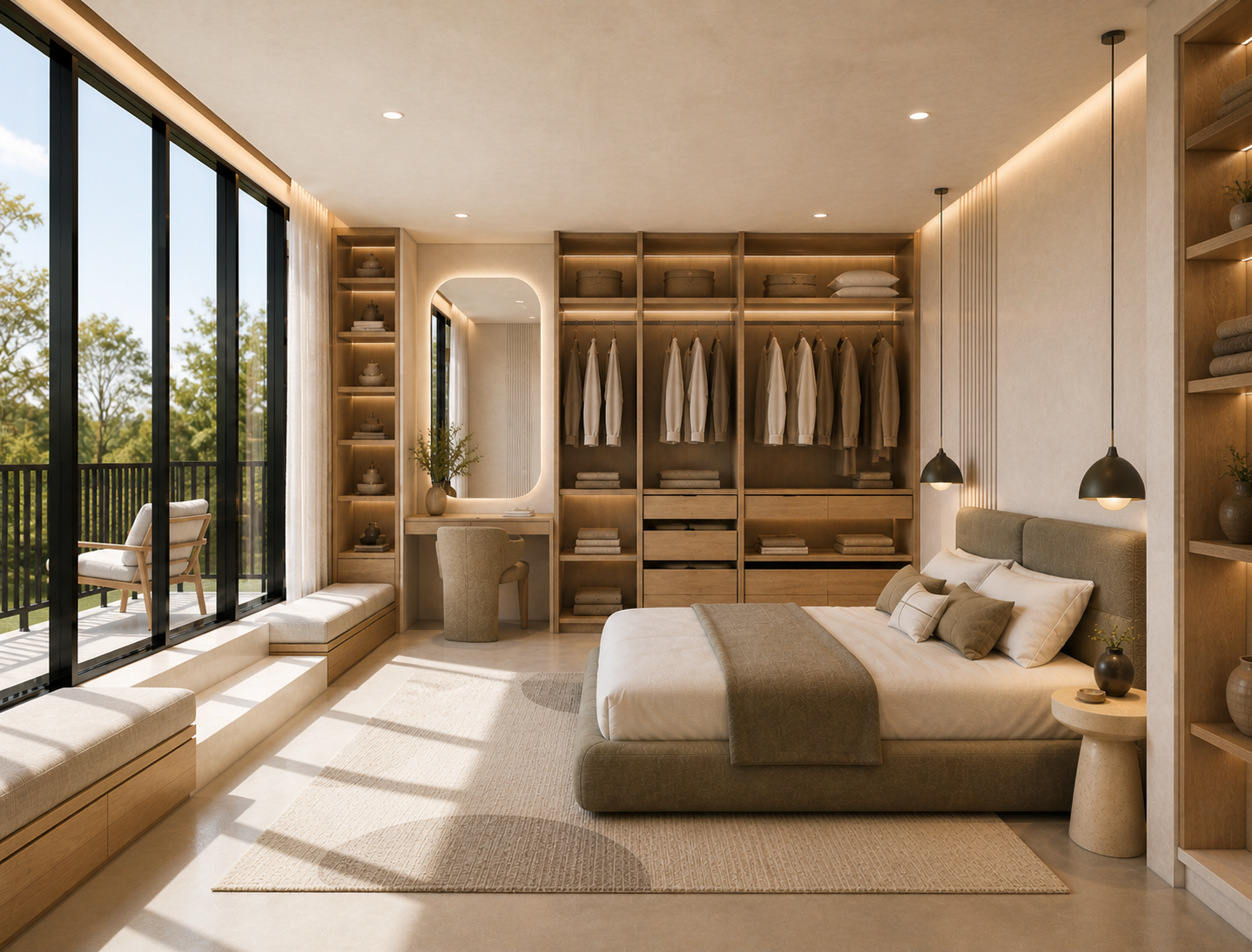
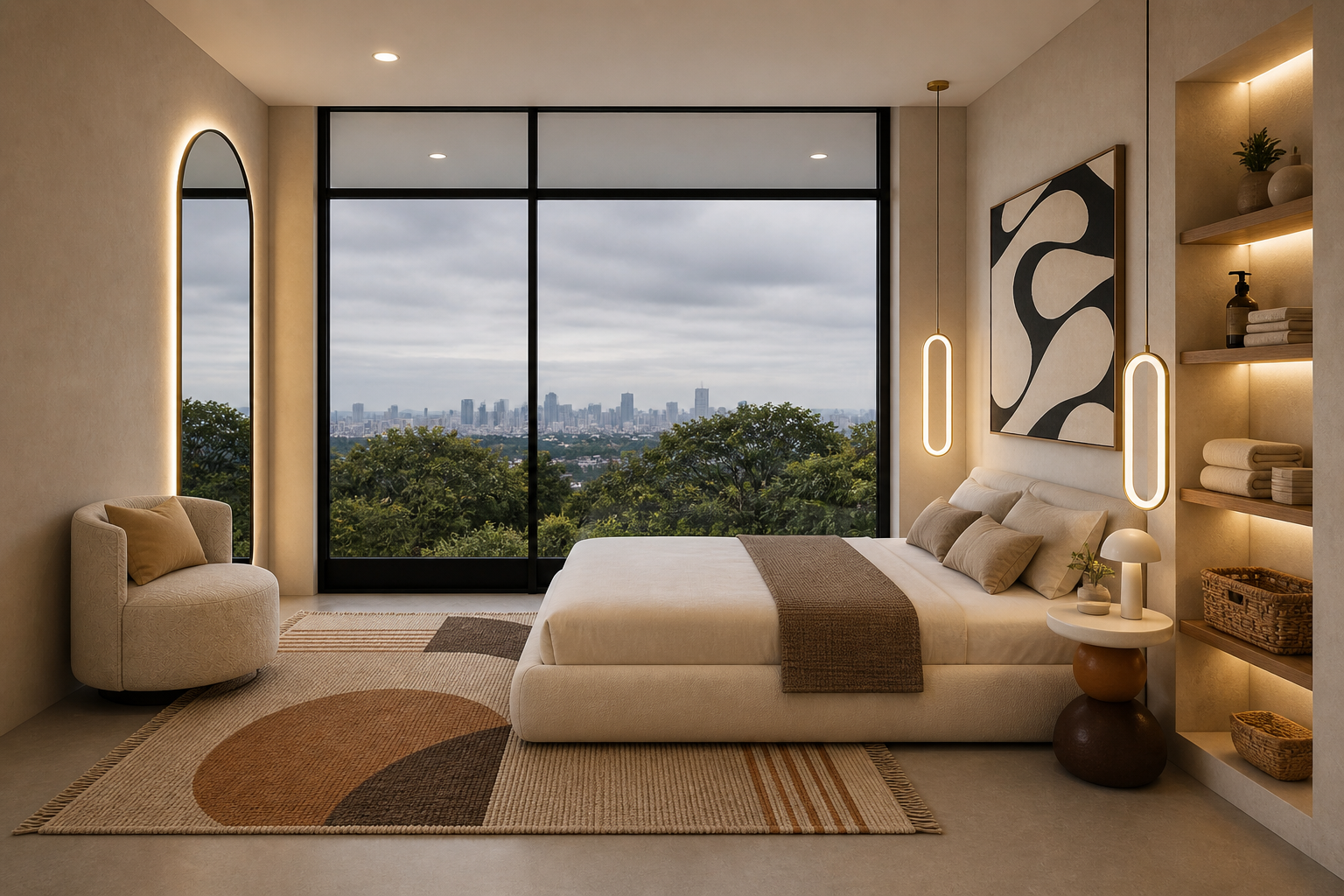
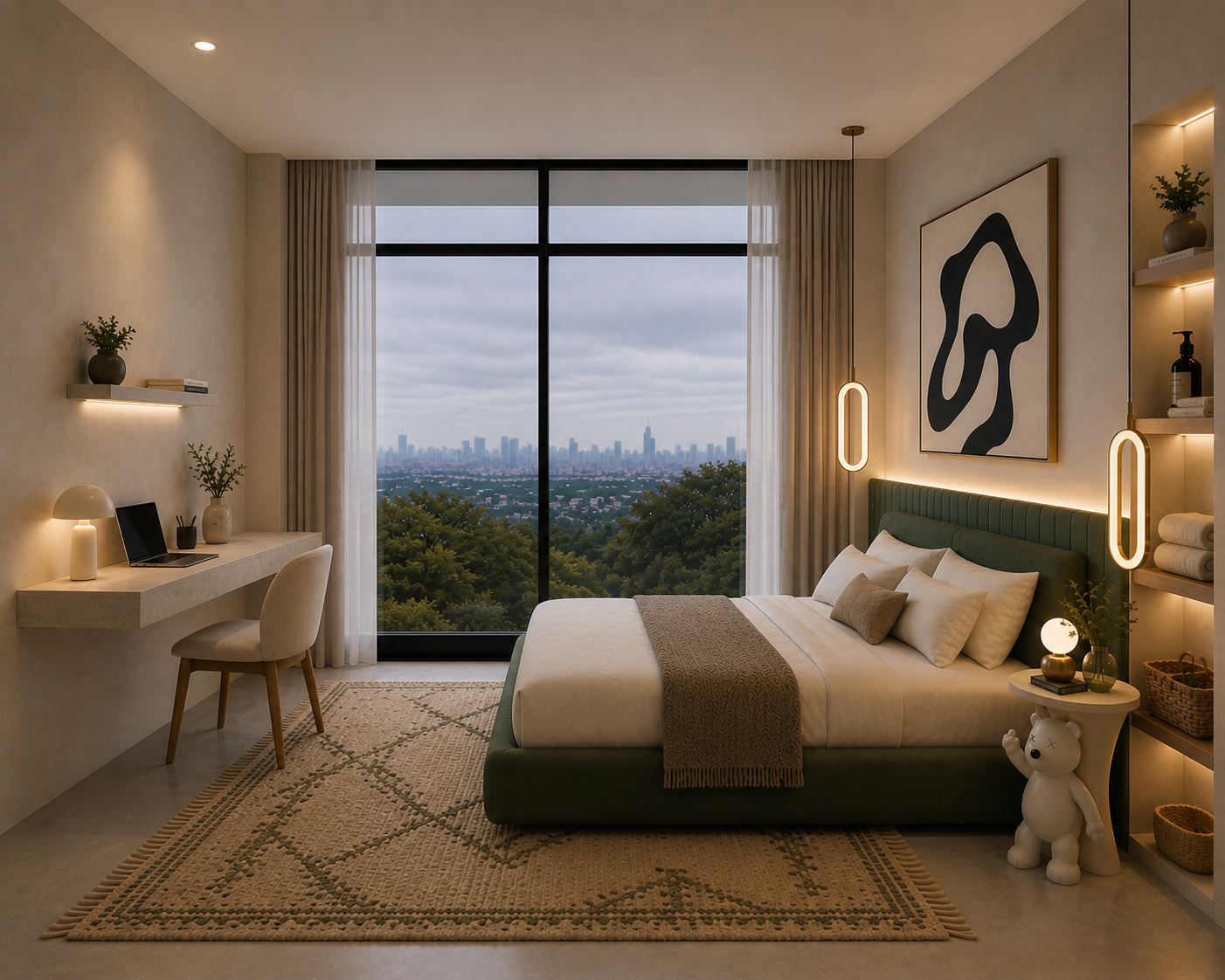
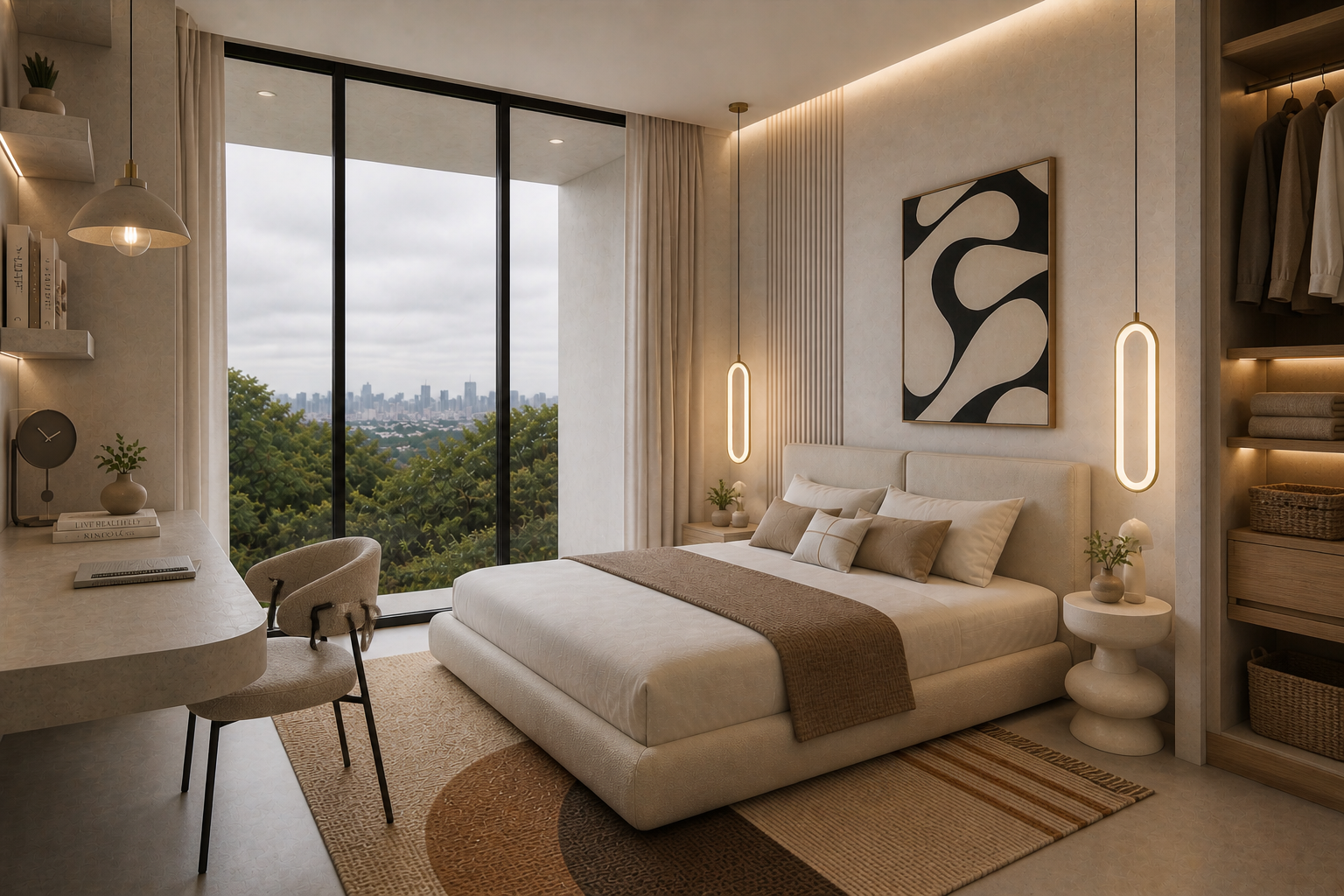
Mezzanine bedrooms, floor-to-ceiling glazing onto the rear garden. Jati wood platform beds, rattan-front wardrobes. Durability-rated materials for high-occupancy use.
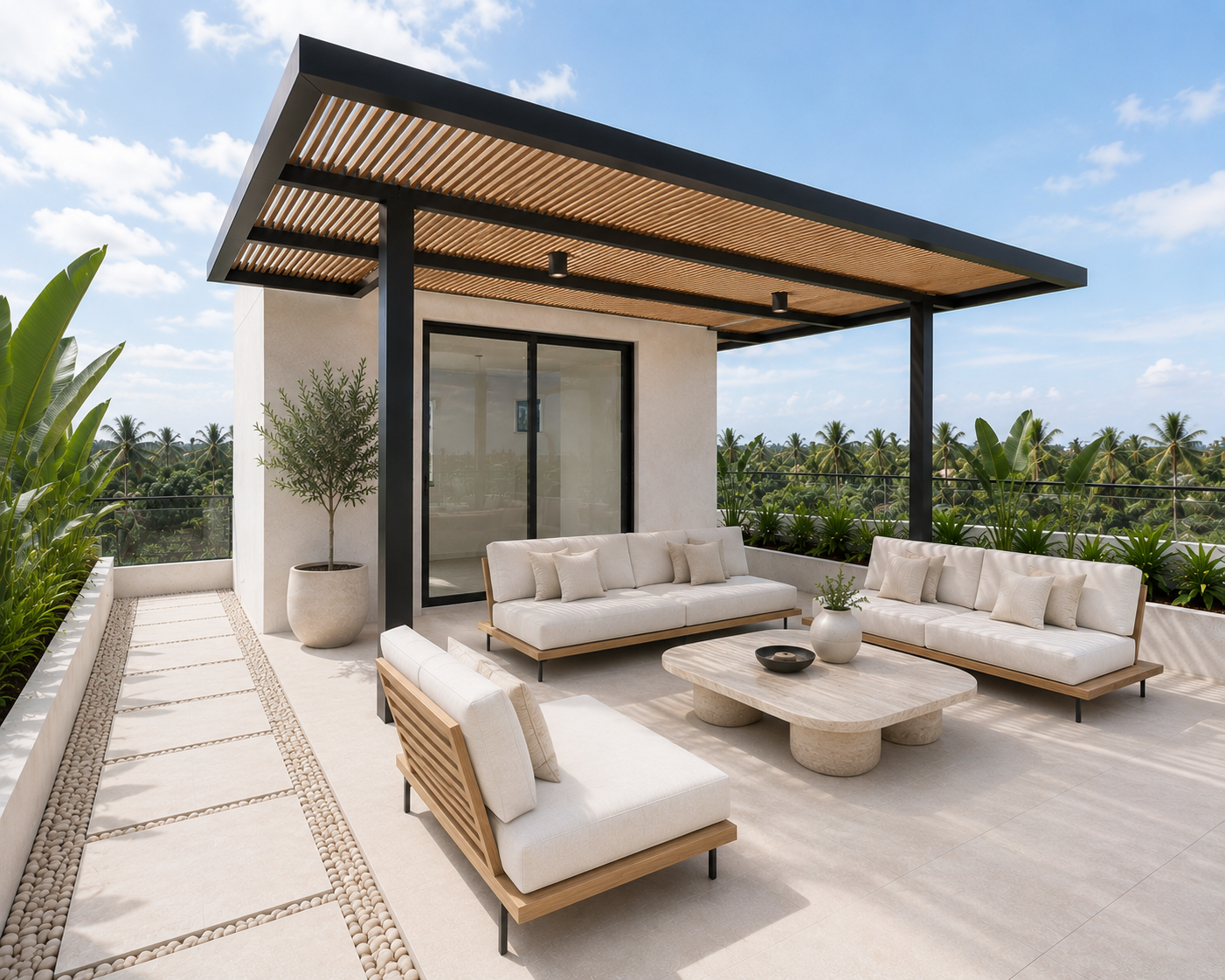
Optional rooftop master, 34.6m² stand-alone suite at rooftop level. Selected by two buyers. Adds meaningful margin; adds meaningful rental rate.
Rooftop + pool, ~45m² rooftop deck. Private 5–6m² plunge pool set against banana trees. Both features appear in every comparable listing that outperforms on short-term rental platforms.
Mezzanine bedroom · rooftop master suite
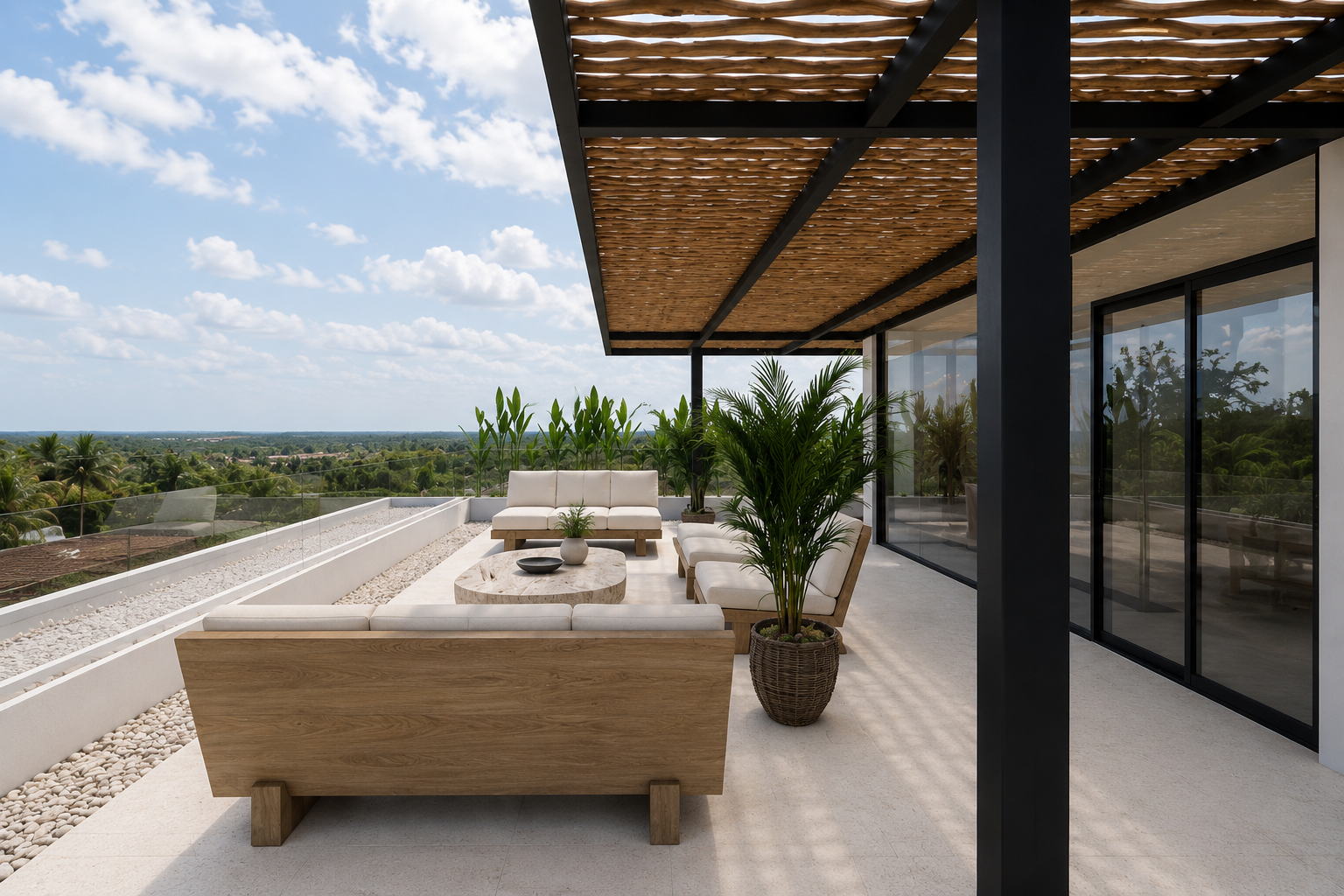 Rooftop terrace · rattan-screen pergola · view to the rice paddies
Bedroom variations · three layout studies · view to the rice paddies
Rooftop terrace · rattan-screen pergola · view to the rice paddies
Bedroom variations · three layout studies · view to the rice paddies
On-site · May 2026
From renders to reality.
Black-frame steel glazing in. Structure topped out. The render gets photographed; this is what actually got built.
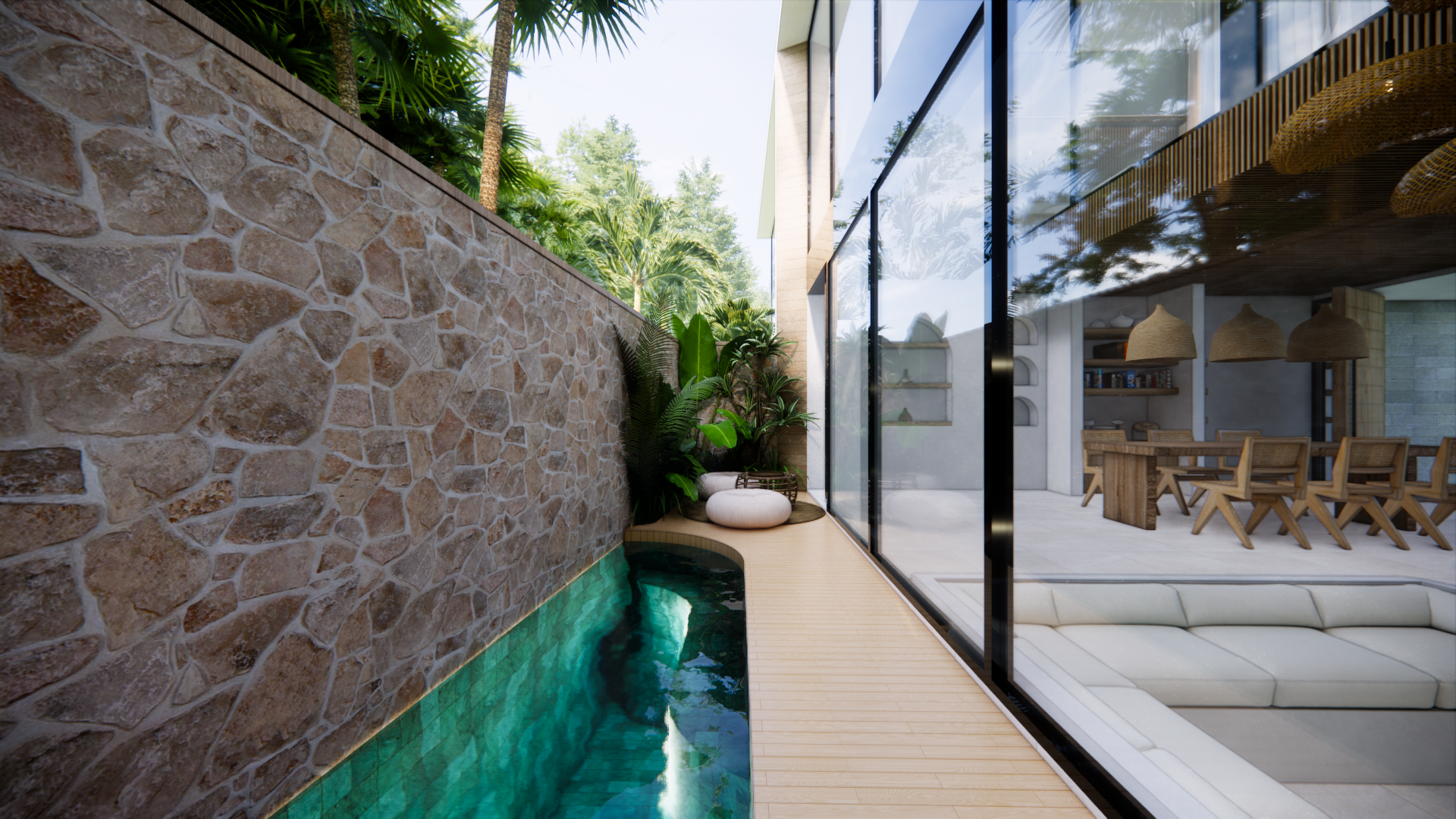 Side garden · plunge pool · glass-walled living room
Cost & returns
The numbers work. I can walk through the modeling.
Priced from $175,000 across five construction-tied payment milestones. Projected 10–21% annual ROI depending on occupancy, based on comparable Pererenan and Canggu listings and twelve-month villa management data from within 2km of the site. Two of five villas sold ahead of completion, without paid marketing or a sales agent. The financials were modeled in full, construction cost per m², net rental yield after management and tax, and breakeven horizon across three occupancy scenarios. If you want to dig into the numbers, I'm happy to walk through it.
Project status
Five villas. Two sold. Three in delivery.
Two delivery waves: Villas 2 and 3 complete June 2026, Villas 4 and 5 complete September 2026.
01
Villa 1
Corner plot · 2BR mezzanine
Sold
02
Villa 2
2BR · optional 3BR · pool · Jun 2026
In delivery
03
Villa 3
3BR mezzanine · rooftop master
Sold
04
Villa 4
2BR · optional 3BR · pool · Sep 2026
In delivery
05
Villa 5
End plot · 3BR · rooftop terrace · Sep 2026
In delivery